

For nearly two decades, ReAct has been at the forefront of the global response to antibiotic resistance, consistently breaking new ground and pioneering innovative approaches. As one of the first international civil society networks dedicated to this critical issue, ReAct has championed a holistic, "One Health" perspective, advocating for solutions that engage all sectors of society. By framing antibiotic resistance as a fundamental development challenge and linking it to broader global agendas like climate change, biodiversity, and the Sustainable Development Goals, ReAct has successfully elevated the issue beyond the confines of the health sector.

Here are 20 examples of ReAct’s engagement and impact spanning over the last two decades that exemplify ReAct’s work since its establishment in 2005. From developing the world’s first antibiotic pipeline analysis to empowering communities in the Global South and mobilizing youth through creative campaigns, these examples showcase a legacy of catalytic action:
1. One of the first global civil society networks on ABR

Founded in 2005, ReAct was one of the first global civil society networks focusing exclusively on antibiotic resistance. Today ReAct has a presence in Africa, Asia-Pacific, Latin America and Europe.
Learn more about the ReAct network.
2. Advancing holistic approach to antibiotic resistance

Long before the concept of “One Health” became mainstream, ReAct advocated against the “war on bacteria” narrative and the “fighting superbugs” language. This in favor of taking a holistic cross-sectoral understanding of the issue. Focus is living in balance with bacteria – and protecting an antibiotic susceptible microbiome in humans, animals and the environment.
3. Framing antibiotic resistance as a developmental issue

In 2016 ReAct was first to describe and publish on the impact of antibiotic resistance on the sustainable development goals contributing to the inclusion of AMR in the preamble of the Sustainable Development Goals and subsequent adoption of AMR indicators.
4. Linking local to global

ReAct remains one of the only actors that combines practical experience from working in countries with engaging in global policy discussions. This allows our policy work to be shaped by the realities on the ground in the regions we are present.
5. Convener of the first global coalition of civil society organisations “The Antibiotic Resistance Coalition (ARC)”

ReAct convened and supported the establishment of the Antibiotic Resistance Coalition – a global policy coalition of 30 civil society organisations with One Health expertise developing joint positions and recommendations into global policy processes.
Read article about ARC meeting in 2018.
6. Co-developed the very first antibiotic pipeline analysis

Together with the European Centre for Disease Control and the European Medicines Agency, ReAct took part in developing the world’s first analysis of the antibiotic pipeline in 2009, which exposed just how frail the antibiotic pipeline is.
Click to access the pressrelease and the report.
7. Delinking profits from antibiotic research and development

The concept of de-linkage first emerged in the context of Research & Development for neglected diseases in the early 2000’s as a novel way to pay for Research & Development of medicines to ensure affordable access to medicines. ReAct subsequently worked with partners in civil society to adapt the concept to ensure not only affordable access, but also avoid large volume sales and published on this in 2012.
8. Championing “equitable and sustainable access” to antibiotics

Since ReAct was created it has championed equitable and sustainable access to effective antibiotics as a central part of everyone’s right to health – highlighting the need to not only focus on reducing inappropriate use of antibiotics, but also increasing access to effective treatment for the millions of patients who lack it in low- and middle-income-countries.
9. Supported development of AMR Action Plans in LMICs

ReAct was one of the first civil society actors to provide technical support for the development and implementation of national action plans on AMR across the African region, and State Action Plans in India after the adoption of the Global Action Plan in 2015.
Read article: Kerala, India: launch of the 1st sub-national action plan on AMR.
10. The first comprehensive online Toolbox on antibiotic resistance

As the Global Action Plan on AMR was first adopted in 2015, ReAct launched the ReAct Toolbox on the sides of the World Health Assembly. Today the Toolbox remains one of the most practical and widely used resources on antibiotic resistance for non-governmental organizations, governments, and educators.
11. Bringing the African continent together on antibiotic resistance

ReAct was the first to establish the convening regional meeting (known today as the the annual ReAct Africa and South Centre Conference for African country representatives to exchange ideas and experiences on the development of national action plans and their implementation.
Click to learn about the ReAct Africa and South Centre Annual Conference.
12. Promoting bottom-up action through empowered communities

For two decades, ReAct’s community-centered approach has empowered local and regional actors including educators, social movements, artists and health workers to co-create solutions to address antibiotic resistance.
13. Piloting Antibiotic Smart Communities

In 2018 ReAct developed the first indicator framework for how to make small communities more antibiotic SMART. This pilot was piloted in communities in Kerala, India and a handbook for data collection has subsequently been published to enable broader update of the method.
Click to learn more about Antibiotic Smart Communities.
14. Engaging youth and students on antibiotic resistance

ReAct has always seen youth and students as powerful actors of change in how antibiotics are used. Over the last two decades ReAct has worked with everything from developing student competitions and setting up youth clubs, to engaging in education of children and students and developing youth campaigns.
15. Mobilized communities and CSOs for the UNGA HLM on AMR in 2024

The global campaign From People to Leaders: Act on AMR NOW!” rallied cross-sectoral support from close to 200 civil society groups and communities worldwide ahead of the UN High-Level Meeting on AMR in 2024, calling for more people-centered solutions.
Visit the From People to Leaders: Act on AMR NOW! campaign site.
16. Exploring art as a medium for awareness raising on ABR

ReAct has worked with numerous artists, musicians, poets, writers, designers and other creative souls throughout the years, amongst others through the “Reimagining resistance” and “Dancing with bacteria” projects to explore the power of art in communicating complex issues such as antibiotic resistance.
Click to learn more about “Dancing with bacteria” including Youtube link to the performance.
17. Pioneered creative campaigns involving children and schools

Since 2012 where “The Alforja Educativa”- program was created by ReAct Latin America, ReAct has engaged children from Ecuador to Kenya, in microbiology and AMR awareness through creative play, dialogue, and local events.
Click to learn more About Alforja Educativa.
18. Applying the Child-to-child methodology

ReAct Latin America has been embracing children as agents of change by using the Child-to-Child methodology. Through this method children have not only taught each other about the microbial world and antibiotic resistance but also taken home messages to their families and communities.
19. Making the link to other major global issues

A ReAct signature approach has always been to broaden the interest in antibiotic resistance by communicating the links to other broader agendas from Universal health coverage, to climate change, biodiversity, the Sustainable Development Goals and non-communicable diseases like cancer.
20. Popularized understanding of antibiotic resistance widely
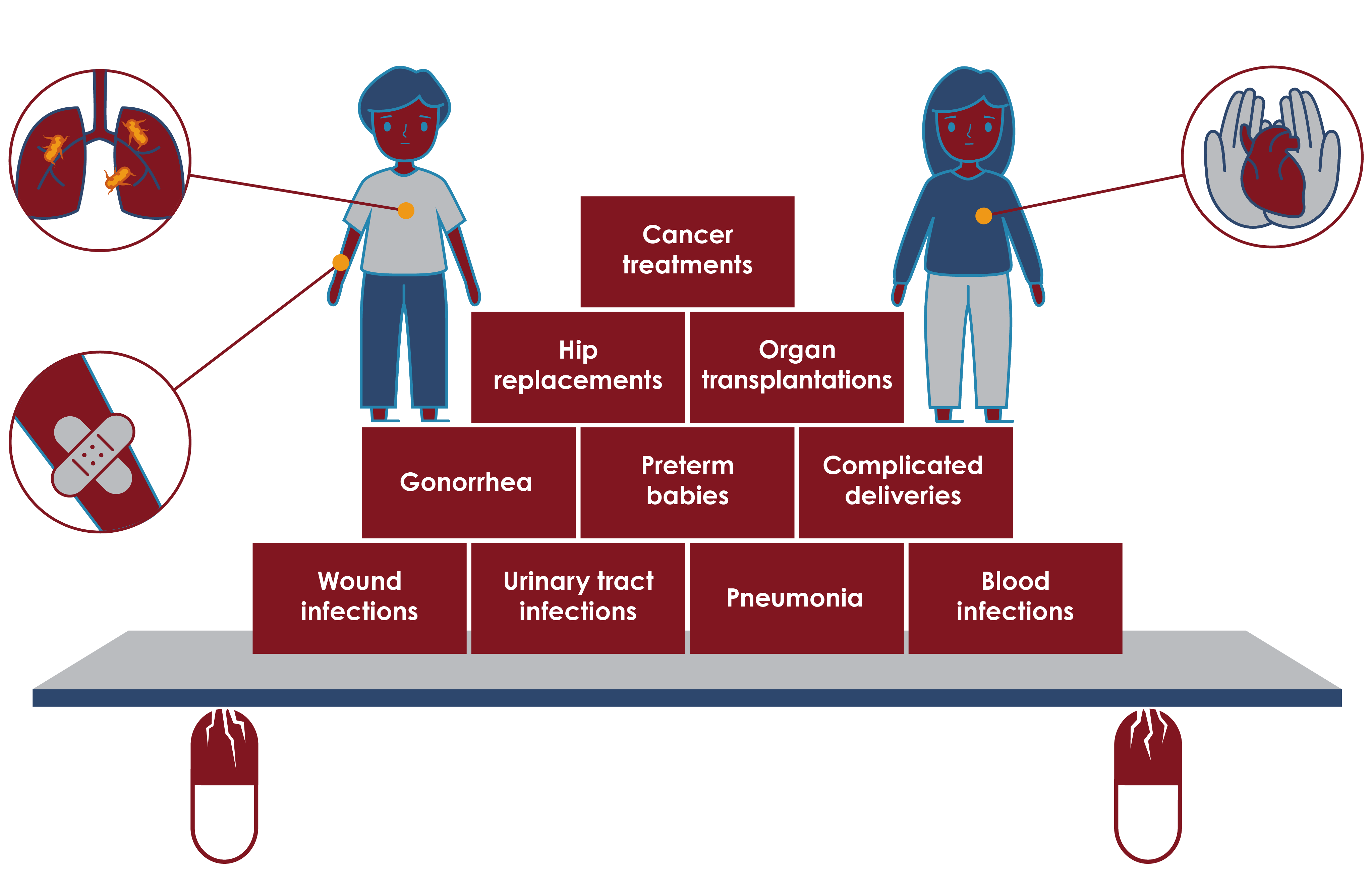
ReAct has always worked to illustrate the impact of antibiotics resistance in various ways – from creating explanatory images like “the antibiotic pyramid” or the “leaking bucket” to engaging in compelling real-life story-telling, ReAct brings the issue to life, helping key stakeholders truly understand and act. At the heart of ReAct’s work is a bold, visionary goal: a world free from untreatable infections – a future we can all relate to, understand, and work toward.
ReAct celebrates 20 years of action on antibiotic resistance!
The story of ReAct began 20 years ago with a small group of passionate global health advocates, several of whom are still part of the network today. Driven by the urgency of antibiotic resistance, ReAct has grown into a global movement with offices across four continents, influencing policy, empowering communities, and shaping governance.
Despite progress, global efforts remain insufficient, and urgent action is needed. ReAct remains committed to driving stronger responses to safeguard effective antibiotics for all.
ReAct’s 20-year journey has transformed AMR governance, strengthened health systems, and mobilized communities worldwide. As we look to the future, we invite partners and funders to join us in scaling impact, driving innovation, and securing sustainable solutions — for a world free from untreatable infections.
More from "ReAct 20 years"
- ReAct 20 Years: 20 pioneering actions on antibiotic resistance!
- 20 voices from 20 years of global partnerships
- Interview-Otto-Cars
- Interview with Arturo Quizhpe
- Hyfa-staff-interview-ReAct-20-years
- Olen-staff-interview-React-20-years
- Silvina staff interview react 20 years
- Elisabeth staff Interview ReAct 20 years