
Across Africa, young people have become an increasingly visible part of the response to antimicrobial resistance. They lead awareness campaigns, form university One Health clubs, engage communities and use digital platforms to make AMR understandable to their peers.
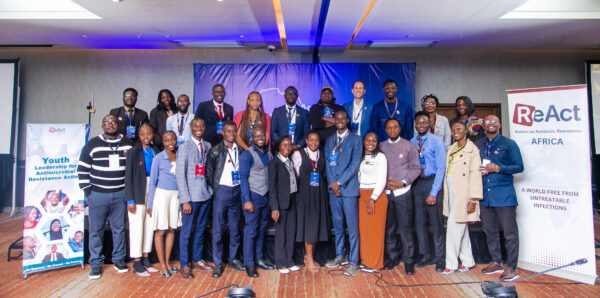
But there is another question to ask: when AMR policies, priorities and programmes are being decided, are young people represented there too? This question shaped the youth side event “Strengthening Youth Engagement in One Health AMR Governance in Africa,” held on 21 July during the ReAct Africa Annual AMR Conference 2026.
Fifty participants, including youth-led organisations, young AMR champions, students, early-career professionals and technical partners, came together to examine the barriers preventing meaningful youth participation in formal AMR and One Health governance structures.
Moving beyond awareness
Awareness remains valuable, but participants argued that youth engagement should not end there. Young people can also contribute to policy development, implementation and accountability.
Achieving this will require formal opportunities for youth representation rather than relying solely on invitations to individual events. Participants highlighted the need for stronger leadership and mentorship, recognition of youth-generated evidence and clearer pathways for young people to participate in national and regional governance structures.
Universities and One Health Clubs were identified as important platforms for building sustained youth engagement. They bring together young people from different disciplines and provide spaces where students can develop technical knowledge, leadership skills and practical experience.
But meaningful One Health participation also requires looking beyond human health. Creating opportunities for young people in animal health, agriculture, environmental health and related fields to participate could help ensure that youth engagement itself reflects the multisectoral nature of AMR.
Building the evidence for youth participation
The discussion also exposed a broader evidence question: how much do we actually know about where and how young people participate in AMR governance across Africa?
The side event laid the foundation for potential regional research on this issue, including a proposed survey and collaborative policy outputs. Understanding where young people currently participate, what prevents them from participating and which models work could provide a stronger basis for future policy recommendations.
If young people are expected to inherit the long-term consequences of antimicrobial resistance, their role in the response cannot be limited to communicating decisions made by others. The next step is creating credible pathways for them to help shape those decisions.
More from "Youth Engagement"
- AMR Leaders Program
- Maarifa Kids Project
- African Youth AMR Alliance Task Force Launch
- African Youth Position Statement on Antimicrobial Resistance (AMR)
- Policy Brief-Engaging Youth in Antimicrobial Resistance at the Country and Regional Level
- Broadening Efforts in Youth Engagement
- AMR Game Launch
- Engaging Youth Through Country Structures and Institutions
- Zambia National AMR Debates for Tertiary Students
- Growing Africa’s Next Generation of AMR Leaders
- Eden vs Apex: AMR Knowledge Goes Head-to-Head
- Young People Are Talking About AMR and Helping Decide What Happens Next
- New African Union AMR Framework