
Global health decisions are often made in meeting rooms far removed from the communities they are intended to serve. On the sidelines of the 79th World Health Assembly (WHA79) in Geneva, ReAct Africa worked to help shape the conversation.
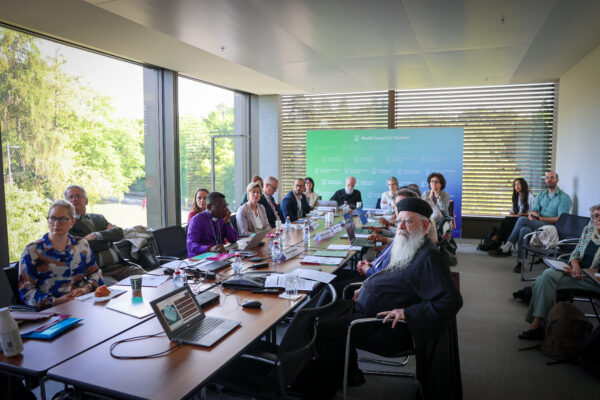
The Assembly engaged with policymakers, multilateral organisations, civil society, faith leaders and community representatives to advocate for a more equitable and people-centred response to antimicrobial resistance (AMR). From high-level policy dialogues to technical consultations, the organisation championed one consistent message: communities must be recognised not simply as beneficiaries of AMR programmes, but as partners in shaping them.
A key highlight was the side event Bridging the AMR Divide: Equity, Access and Community-Led Solutions, convened by ReAct Africa in partnership with the World Council of Churches. The side event brought together representatives from WHO, Unitaid, faith-based organisations, academia, civil society and community groups to explore how equity and access can become central pillars of global AMR action.
Discussions emphasised that progress depends on more than expanding access to antibiotics. Participants called for stronger health systems, equitable access to diagnostics, sustainable financing for National Action Plans, and greater recognition of community-generated evidence in national decision-making. Faith-based organisations and community actors were also recognised as critical partners in strengthening governance and reaching populations often left behind.
Beyond the side event, ReAct Africa participated in several high-level discussions that will help shape the future direction of global AMR governance.
At the WHO Civil Society Task Force on AMR, discussions focused on moving beyond dialogue towards practical, community-driven implementation. Participants advanced work on strengthening civil society coordination, community-led monitoring, resource mobilisation and a global campaign to improve equitable access to penicillins.
ReAct Africa also joined discussions at the Health Diplomacy House, where global leaders reflected on the governance and financing gaps that continue to slow progress against AMR. Conversations reinforced the need for predictable financing, stronger political leadership and governance systems capable of sustaining action beyond periods of heightened international attention.
The Assembly concluded with the adoption of the updated Global Action Plan on AMR (2026–2036), providing renewed momentum for countries and partners. This new framework prioritizes One Health sectors and places a central emphasis on equity, equitable access, and the introduction of governance as a core strategic objective, guiding implementation over the coming decade.
For ReAct Africa, the week reaffirmed that effective AMR governance must be rooted in collaboration across sectors, institutions and communities. While global policies establish direction, meaningful progress will ultimately depend on how those commitments are translated into action within countries and communities across Africa.
More from "Community Engagement"
- KAP Study
- Matero community takes a stand against antimicrobial resistance
- Scaling up Community Engagement
- Integration of AMR in Gender driven community initiatives
- Faith Based Organizations: Critical allies for stronger action on AMR
- Faith Leaders Across Africa Unite to Champion Action on Antimicrobial Resistance
- Putting Communities at the Centre of Global AMR Conversations at WHA79
- “Protect, Preach, Prevent”: Can the Church Help Change How Communities Use Antibiotics?