
Automatic translation by Google. Limitations and info.

Published: 12 October 2026
ReAct Africa is pleased to announce the release of the third edition of AMR Watch Magazine – Issue 3 , themed Voices of the Community, celebrating the diverse people, perspectives and initiatives contributing to the response to antimicrobial resistance (AMR) across Africa.
This edition takes readers beyond scientific and policy discussions to explore how AMR is understood and addressed in everyday community settings. From older adults in Ghana learning about antimicrobial resistance to farmers adopting better biosecurity practices, faith leaders integrating AMR messages into their communities and young people championing awareness and advocacy, the magazine highlights the many ways individuals and communities are contributing to meaningful action.
At its core, Voices of the Community reinforces the importance of recognising communities not only as beneficiaries of interventions, but as informed, active and essential partners in addressing AMR
If you or your organisation are doing amazing work to tackle AMR in Africa, this platform is for you! Reach out to our comms team through info@reactafrica.org for content submission for the next edition.
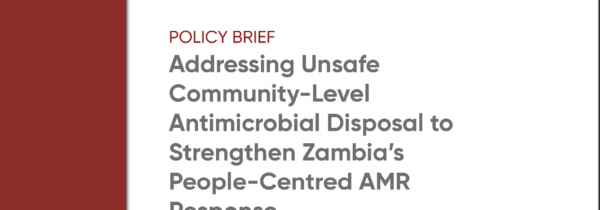
This Youth Policy Brief highlights the critical but often overlooked issue of unsafe community-level antimicrobial disposal in Zambia and its contribution to environmental antimicrobial resistance (AMR).

In 2025, ReAct Africa Strengthened its regional position through action-oriented response to Antimicrobial Resistance (AMR)
In this report; RAN ANNUAL REPORT 2025
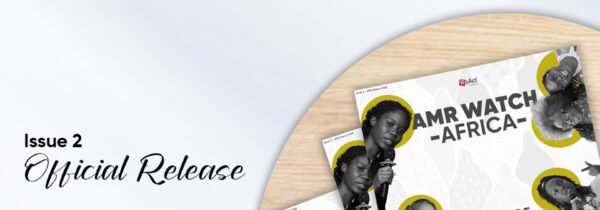
The second edition of AMR Watch: Voices of the Community showcases community-driven and youth-led action on antimicrobial resistance across Africa from integrated health initiatives in Ghana, to student advocacy in Kenya, and One Health leadership in Zambia. These stories reflect a growing, locally led movement turning awareness into impactYour work deserves to be seen.
If you or your organisation are doing amazing work to tackle AMR in Africa, this platform is for you! Reach out to our comms team through info@reactafrica.org for content submission for the next edition.

ReAct Africa, in partnership with EPN, ACHAP, and the World Council of Churches, has launched a new policy brief highlighting the critical role of Faith-Based Organisations (FBOs) in Africa’s fight against antimicrobial resistance (AMR).
AMR is responsible for over one million deaths annually and threatens health systems globally. In many African countries, FBOs deliver 40–60% of healthcare services, supporting government health systems and reaching underserved communities.
The policy brief outlines evidence, case studies, and recommendations to strengthen collaboration between governments, civil society, and faith networks to advance equitable, whole-of-society AMR responses.

This guide seeks to bring science and faith in conversation, providing accurate information on rational use of medicines, proper ways of disposal and the impacts of Antimicrobial Resistance.

This guide seeks to bring science and faith in conversation, providing accurate information on rational use of medicines, proper ways of disposal and the impacts of Antimicrobial Resistance.

We are excited to share the launch of the 1st edition of our digital magazine, AMR WATCH MAGAZINE
Inside the magazine:
Inspiring stories from CSOs, youth leaders and innovators
Community-driven solutions and advocacy efforts
A fresh African perspective on AMR engagement that rarely get the spotlight.
Your work deserves to be seen. If you or your organisation are doing amazing work to tackle AMR in Africa, this platform is for you! Reach out to our comms team @info@reactafrica.org for content submission for the next edition.

ReAct Africa and ICARS, jointly co-hosted the roundtable on ‘Scaling Solutions and Financing for Antimicrobial Resistance Mitigation’ on June 2nd 2025, during the Second Hamburg Sustainability Conference 2025 held from June 2nd and 3rd, The roundtable recognized AMR as a critical global health and development threat, especially in low-middle income countries and brought together governments, multilateral banks, donors, and private actors to explore practical, action-oriented pathways to implement AMR commitments. The joint statement, endorsed by participants, urged equitable financing, integration of AMR into national and development agendas, and the need for sustained political momentum post 2024 UNGA declaration. It emphasized the One Health approach, multisectoral collaboration, and global solidarity to achieve the set targets such as a 10% reduction in AMR-related deaths and 60% of countries with funded AMR action plans by 2030.

We are pleased to share with you the newly released Summary Report of the 2025 Annual Antimicrobial Resistance (AMR) Conference. The conference was hosted by ReAct Africa and South Centre in partnership with Zambia National Public Health Institute (ZNPHI), ICARS, AMR Policy Accelerator, GARDP, LifeArc, ESCA-HC with support from SIDA, Wellcome and Fleming Fund.
The report captures key highlights, discussions, and actionable recommendations from this year’s gathering, which brought together policymakers, experts, and stakeholders committed to advancing Africa’s AMR agenda.

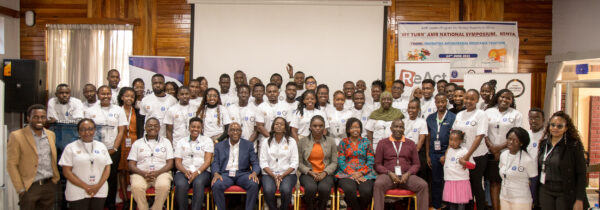
An evaluation of ReAct Africa’s work among with in the Sub-saharan region.

Recommendations and insights on how to successfully engage youth in Antimicrobial Resistance at Country and Region level.

A Decade of impact: ReAct Africa and South Centre Conference Impact Report