
Antimicrobial resistance (AMR) is often discussed as a health issue, but its solutions extend far beyond hospitals and laboratories. Effective action depends on political leadership, sustainable financing, and policies that can strengthen health systems for years to come.
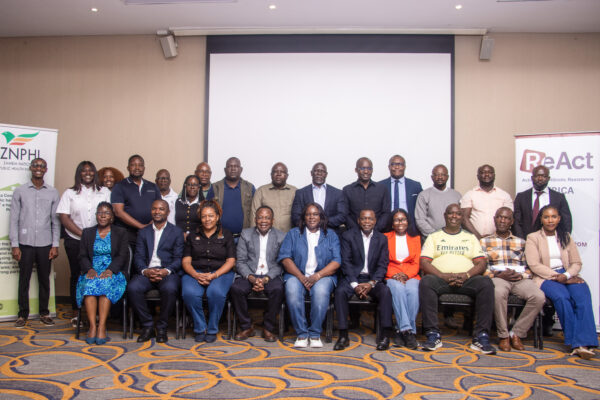
Recognising this, ReAct Africa, in collaboration with the Zambia National Public Health Institute (ZNPHI), convened Members of Parliament on 1 May 2026 to advance political leadership and accountability on AMR. The engagement marked an important milestone in the establishment of Zambia’s Parliamentarians’ Caucus on Antimicrobial Resistance, a platform designed to keep AMR high on the national agenda through informed legislation, oversight, and resource mobilisation.
Moving from awareness to action
Antimicrobial resistance continues to threaten progress in healthcare, food systems, and economic development. While technical expertise remains essential, lasting progress depends on the decisions made by those responsible for shaping national priorities.
Members of Parliament play a unique role in translating evidence into action. Through legislation, budget oversight, and engagement with communities, parliamentarians can help ensure that national AMR commitments are backed by policies, resources, and accountability mechanisms.
The meeting focused on reviewing and adopting the Terms of Reference (TORs) and the Constitution, thereby strengthening the structures needed to sustain political commitment over time.
Building a platform for long-term leadership
Discussions centred on advancing the Parliamentarians’ Caucus as a coordinated mechanism to champion AMR across sectors and political cycles.
Participants reached consensus on the foundational documents that will guide the Caucus, aligned on its governance and operational direction, and instituted interim leadership to steer the next phase of development.
These milestones represent more than administrative progress. They provide the foundation for a platform through which parliamentarians can collectively advocate for stronger AMR policies, promote domestic investment, and monitor implementation of Zambia’s national commitments.
Why political leadership matters
Addressing AMR requires coordinated action across human, animal, and environmental health. It also requires sustained investment, policy coherence, and continued oversight, responsibilities that extend well beyond the health sector.
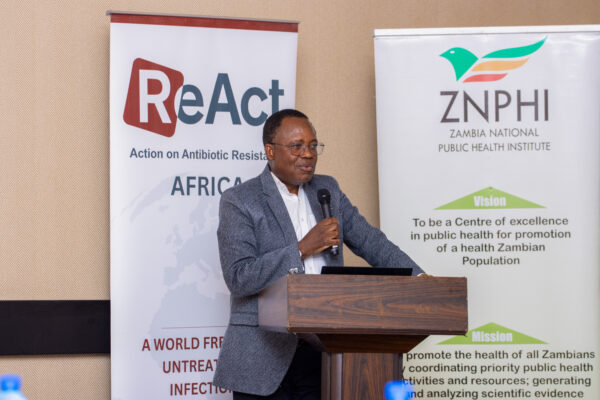
By strengthening parliamentary engagement, Zambia is reinforcing the principle that AMR is not solely a technical challenge but a national development priority requiring leadership across government.
As countries continue implementing commitments made through global and regional AMR frameworks, parliamentary leadership will become increasingly important in ensuring that policies move beyond paper and into practice.
Looking ahead
The establishment of the Parliamentarians’ Caucus represents an important step towards embedding AMR within Zambia’s broader governance and development agenda.
ReAct Africa remains committed to working alongside government institutions, policymakers, and partners to strengthen political ownership of antimicrobial resistance and support evidence-informed decision-making.
More from "Policy Engagement"
- Zambia- Parliamentarian Engagement
- Parliamentarians Rally to Tackle Antimicrobial Resistance in Africa
- Strengthening Parliamentary Support for the Fight Against AMR
- Regional Leaders Align Ahead of Global AMR Ministerial Meeting
- Zambia Strengthens Political Leadership on Antimicrobial Resistance Through Parliamentarians’ Caucus
- Zambia Has AMR Evidence. The Next Challenge Is Getting It into Policy.
- When an AMR Intervention Works, How Do We Make It Last?