
Antimicrobial resistance is shaped by decisions across health systems, agriculture, food production, policy and communities. Understanding these connections requires more than awareness. It requires the ability to examine evidence, challenge different perspectives and engage critically with the choices that influence how antimicrobials are used.
Zambia’s 2026 National AMR Debate Competition for Tertiary Students created a platform for young people to do exactly that.
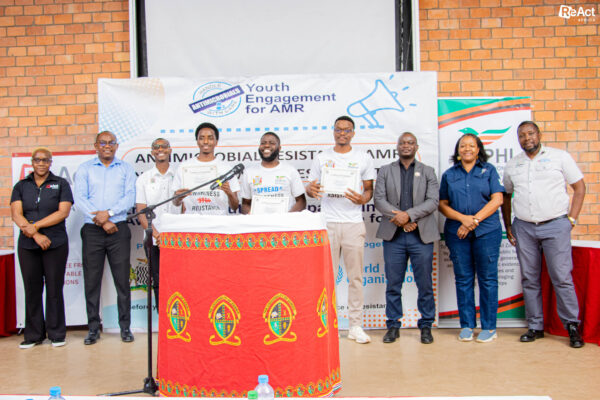
Held from 4–18 September across Lusaka, Central and Copperbelt Provinces, the competition brought together 909 participants from 17 tertiary institutions. Through evidence-based debate, students explored some of the complex scientific, policy and social dimensions of AMR while building their capacity to communicate and advocate around the issue.
The diversity of participants was central to the competition. Students came not only from medicine, pharmacy, nursing and public health, but also veterinary science, agriculture, law, ICT, education, business studies and mass communication, bringing different perspectives to a challenge that cuts across sectors.
That mix was particularly relevant to AMR. Drug resistance is often perceived primarily as a medical problem, yet its causes and consequences extend across human and animal health, agriculture, food systems, the environment and wider society.
The debate platform allowed students to encounter AMR through these different perspectives.
Motions tackled real-world questions around antibiotic misuse, gaps in policy enforcement, veterinary antimicrobial use and the responsibilities of governments and pharmaceutical companies. Students had to research these issues, interpret evidence and national policies, construct arguments and respond to opposing positions.
In doing so, AMR became something to interrogate rather than simply memorise.
From 17 institutions to one national champion
The competition progressed through provincial rounds before bringing qualifying institutions together for the national stage.
Students demonstrated strong research and articulation throughout the debates, with participants drawing on sources including WHO reports and national policies to support their arguments.
At the end of the competition, Mulungushi University emerged as the 2026 National AMR Debate Champion. The University of Zambia Ridgeway Campus placed second, while Kwame Nkrumah University took third place.
The ten highest-performing individual speakers were also recognised.
Yet the value of the competition extended beyond those who took home awards. It created a space where students could develop confidence in communicating about AMR and engage with perspectives from disciplines and institutions different from their own.
Taking the debate beyond university walls
The national competition also provided an opportunity to take AMR conversations to audiences who were not physically present.
The finals were broadcast during prime time on ZNBC, while television, radio, print and electronic media organisations including Crown TV, ZANIS, Radio Icengelo, Radio Maria, Phoenix Radio and the Zambia Daily Mail provided additional coverage.
Social media communication around the debates recorded a reach of 3,885, further extending the conversation beyond participating institutions.
This wider visibility matters because the students were not only debating for judges. They were communicating AMR issues to fellow students, families and members of the wider public.
The students also told us what needs to improve
The post-debate evaluation provided important lessons for the next competition.
While participants reported high levels of satisfaction, the most prominent concern in open-ended feedback related to perceptions of fairness and transparency in judging. Participants raised questions about consistency in scoring, institutional favouritism, moderator influence and transparency of results.
The 2026 competition demonstrated that young people can engage seriously with the scientific, policy and social dimensions of antimicrobial resistance when given the platform to do so.
More from "Youth Engagement"
- AMR Leaders Program
- Maarifa Kids Project
- African Youth AMR Alliance Task Force Launch
- African Youth Position Statement on Antimicrobial Resistance (AMR)
- Policy Brief-Engaging Youth in Antimicrobial Resistance at the Country and Regional Level
- Broadening Efforts in Youth Engagement
- AMR Game Launch
- Engaging Youth Through Country Structures and Institutions
- Zambia National AMR Debates for Tertiary Students
- Growing Africa’s Next Generation of AMR Leaders
- Eden vs Apex: AMR Knowledge Goes Head-to-Head
- Young People Are Talking About AMR and Helping Decide What Happens Next
- New African Union AMR Framework
- More Than a Competition: What Happens When Students Put AMR Up for Debate?