India: Strengthening partnerships for stronger action on AMR
Share the article
2025-02-26
ReAct Asia Pacific recently convened key global and regional stakeholders in Delhi to strengthen collaboration for stronger action on antimicrobial resistance (AMR). Discussions focused on integrating AMR efforts into health programs, enhancing governance, expanding digital health tools, and fostering public-private partnerships. Building on India’s successful initiatives like the Jeet TB program, this effort aims to improve global health resilience through collective action.
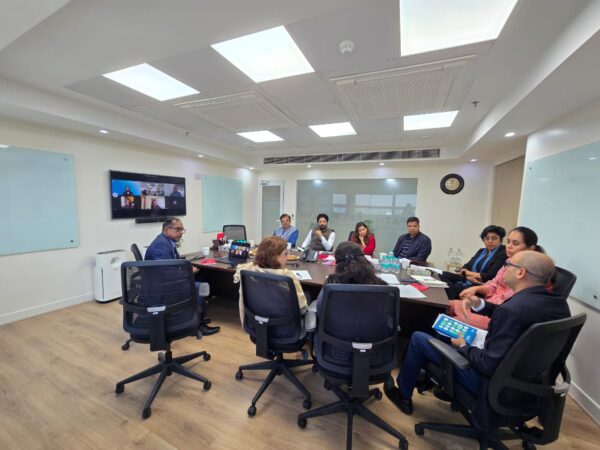
Meeting attendees gathered around the table for discussions. Photo: ReAct Africa.
Addressing the challenge of antimicrobial resistance requires a coordinated, multi-sectoral approach that brings together diverse expertise and resources. In response to this need, ReAct Asia Pacific recently convened a consortium of key stakeholders to facilitate discussions, build partnerships, and develop practical strategies to address antimicrobial resistance more effectively.
The AMR Partners Meeting, held on February 13, 2025, at the PATH office in Delhi, brought together leading global and regional organizations. Participants included representatives from:
The Foundation for Innovative New Diagnostics (FIND)
The International Union Against Tuberculosis and Lung Disease (The Union)
The Clinton Health Access Initiative (CHAI)
The KNCV Tuberculosis Foundation
The Global Antibiotic Research and Development Partnership (GARDP)
The Indian Medical Association (IMA)
The Indian School of Business (ISB) Hyderabad
Family Health International 360 (FHI 360)
These stakeholders engaged in substantive discussions on the imperative of strengthening national leadership, enhancing multi-sectoral coordination, and fostering collaborative engagement to address AMR comprehensively.
Key discussions and strategies
Discussions emphasized the importance of integrating AMR efforts into existing health programs, to enhance their effectiveness and sustainability. Additionally, aligning AMR governance with multi-sectoral strategies was recognized as crucial, with recommendations to encourage public-private partnerships (PPPs) for a more cohesive approach.
The discussion also emphasized the need for greater community engagement and public awareness, recognizing that public support and understanding play a key role in addressing AMR. Expanding models like Antibiotic Smart Communities and strengthening pharmacy regulations, were suggested as effective ways to enhance advocacy and responsible antibiotic use.
Furthermore, expanding the use of digital health tools and advanced diagnostics was identified as an important step in improving AMR surveillance, stewardship, and response efforts. Participants stressed the need to scale up point-of-care diagnostics, strengthen laboratory capacity through technical training, and develop a national digital AMR surveillance system to enhance real-time data collection and response. Efforts to strengthen AMR stewardship and smart hospital initiatives were also discussed. The Indian Medical Association’s (IMA) Antibiotic Smart Hospitals initiative was recognized as a promising model.
Collaboration and shared commitment remain essential in the fight against AMR. Addressing challenges such as limited stewardship programs, and declining investments in antibiotic research and development (R&D) will require coordinated, multi-sectoral engagement. The consortium committed to work in synergy to develop effective solutions, strengthen governance mechanisms, and create long-term strategies. By working together, progress can be made toward mitigating the threat of AMR and improving the resilience of global health systems.
Building on India’s Public Health Success Stories
Dr. S.S. Lal, Director ReAct Asia Pacific. Photo: Private.
“In today’s world, overcoming challenges in public health requires the collective efforts of all relevant stakeholders. Antimicrobial resistance (AMR) is no exception. India has a proven track record of tackling major public health issues, such as tuberculosis, through strategic partnerships. A shining example of this is Jeet, a partnership established in India in 2014 to engage the private health sector in the fight against TB elimination. This initiative stands as a landmark achievement in our nation’s public health history.
The recent formation of a new partnership in Delhi in February 2025 to combat AMR is a timely and critical step forward. It is particularly encouraging to see that some of the key partners behind Jeet are also driving this new AMR initiative. Together, through collaboration and shared commitment, we can address the growing threat of AMR and safeguard public health for future generations.”