
2025-12-09
As 2025 marks the 80th anniversary of Sir Alexander Fleming, Sir Ernst Chain, and Lord Howard Florey's 1945 Nobel Prize in Medicine, we reflect on a drug that fundamentally shifted the balance of power between humanity and infectious disease. Yet, this celebration is tempered by the very warning Fleming issued during his acceptance speech: the misuse of antibiotics could select for bacterial resistance, rendering the miracle drug ineffective. Today, this warning is the looming crisis of antibiotic resistance, a threat that is endangering modern medicine.

Life before antibiotics
The discovery of penicillin by Sir Alexander Fleming in 1928 remains one of the most critical turning points in human history. To truly appreciate penicillin, we must first look back at the pre-antibiotic era. At the start of the 20th century, infections were the leading cause of death. In the U.S. in 1900, infectious diseases caused one-third of all mortality, with pneumonia, tuberculosis, and diarrheal diseases as the top killers (1) . Simple events like a minor cut, an insect bite, or childbirth frequently led to fatal infections. In many major conflicts, more soldiers succumbed to infected wounds than to combat itself. While pioneers like Pasteur and Lister had established the germ theory and improved hygiene, it was the introduction of effective antibiotics, starting with penicillin’s mass production in the 1940s, that truly changed the odds.
How penicillin transformed medicine
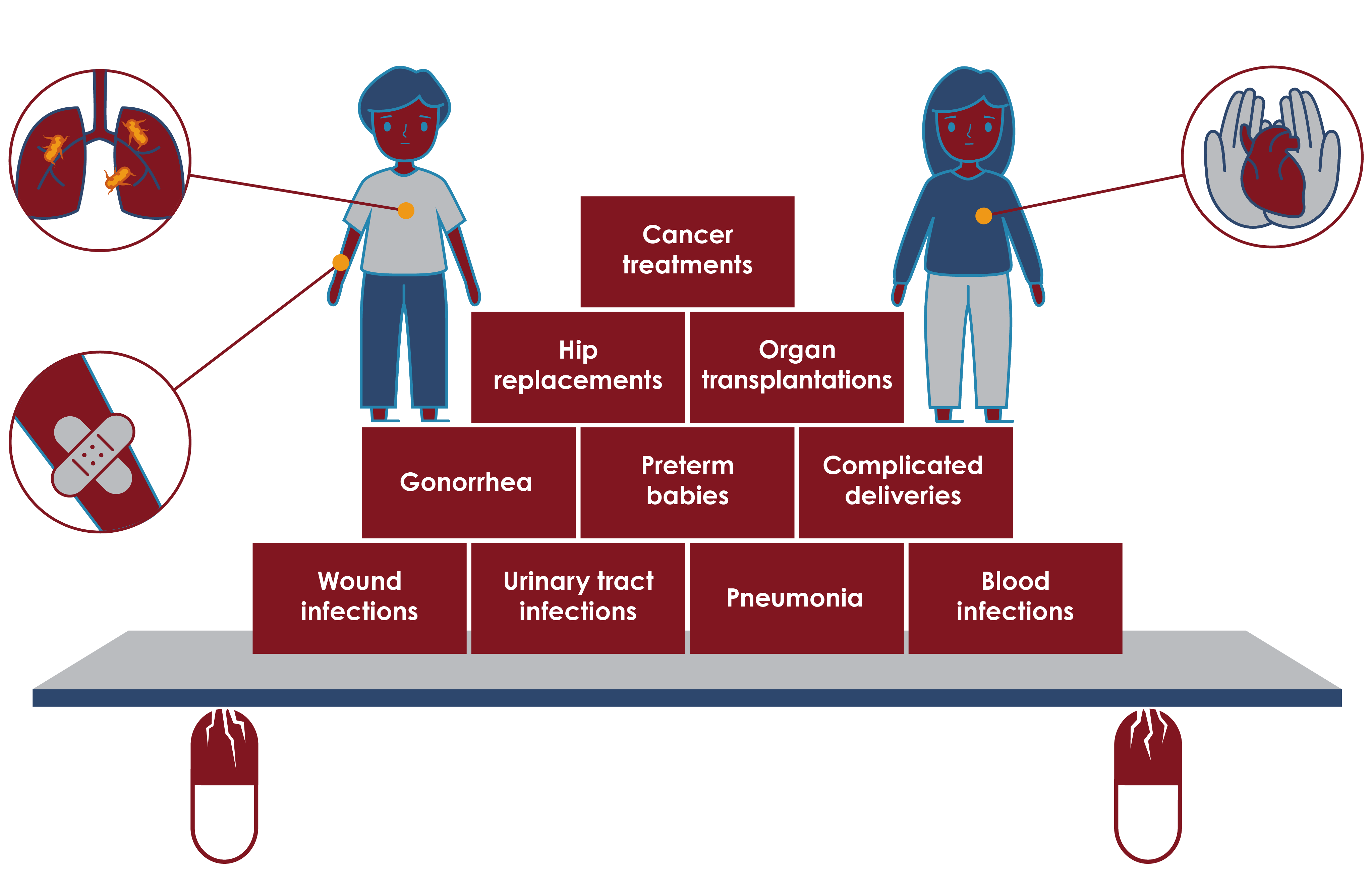
Penicillin and the subsequent development of other antimicrobials didn’t just treat sickness; they enabled entirely new fields of medicine. This transformation can be seen in several key areas:
Wound management
Previously life-threatening injuries became manageable concerns overnight. Infections like sepsis, once a death sentence, could now be successfully treated, transforming battlefield and industrial medicine.
Maternal and child health
Infections remain a major killer of mothers and children in low-income nations, but in high-income countries, antibiotics drastically reduced mortality associated with childbirth and common childhood illnesses, such as pneumonia, diarrhea, and severe ear or throat infections. Vaccinations is also needed to be mentioned here as key for maternal and child health.
Sexually transmitted infections
Antibiotics also transformed the treatment of common STIs such as syphilis and gonorrhoea, which previously caused severe long-term health consequences and widespread transmission.
Complex surgeries
Modern surgery, including procedures like hip replacements and organ transplants, is completely dependent on antibiotics to prevent lethal post-operative infections. Without them, the risk of infection would outweigh the benefit of most complex operations.
Critical care and immunosuppression
Intensive care units (ICUs) and treatments for cancer (chemotherapy) or autoimmune diseases rely on the ability to prevent or quickly treat infections in highly vulnerable, immunosuppressed patients.
The looming threat and the path forward

Despite its remarkable success, this medical revolution is fragile. The vision of a post-antibiotic world is bleak: a massive decrease in global life expectancy, “ordinary” infections becoming untreatable and fatal, and major procedures like chemotherapy and organ transplantation being rendered impossible. Current estimates suggest that antibiotic resistance causes over 1.2 million deaths each year (2), and projections indicate this could rise dramatically by 2050 without urgent action (3).
Preserving the legacy of penicillin requires a complex, multi-faceted strategy that addresses global equity. On one hand, we must focus on the sustainable use of existing drugs, reducing unnecessary consumption in both human and animal health to slow the development of resistance. On the other, we must urgently tackle the issue of access, ensuring that the millions in poorer countries who still lack these life-saving medicines receive them.
Furthermore, we must support the development of new antibiotics, diagnostics, vaccines, and alternative therapies, alongside stronger prevention measures – from infection control and vaccination to water, sanitation and hygiene – and a more efficient end-to-end pipeline to bring these tools to those who need them. Only through coordinated global action can we ensure that future generations continue to benefit from one of medicine’s greatest breakthroughs.
This might also interest you
7 ways penicillin has cured the world for more than 90 years.
The ReAct Toolbox – Understand antibiotic resistance.
More about antibiotic resistance.
Support Us: Help us reach our vision: A world free from untreatable infections.
References
1. CDC. Achievements in Public Health, 1900-1999: Control of Infectious Diseases. Morbidity and Mortality Weekly Report (MMWR). 1999; 48(29); 621-629.
2. Murray CGL et al. Global burden of bacterial antimicrobial resistance in 2019: a systematic analysis (2022).
3. Naghavi et al. Global burden of bacterial antimicrobial resistance 1990–2021: a systematic analysis with forecasts to 2050 (2024)
More from "2025"
- ReAct 2026: Six focus areas
- Sweden’s new Strategy on Antimicrobial Resistance
- 80 Years since the Nobel Prize for penicillin: Saving lives, facing resistance
- Zambia for WAAW: Maarifa kids book day
- Latin American “Minga” for World AMR Awareness Week
- ReAct Asia Pacific: young voices and artistic expression
- Workshop at Uppsala University: AMR and community engagement
- New Asia-Pacific Youth AMR Task Force!
- 3 questions to ZDOROVI – ReAct’s new partner in Ukraine
- ReAct activities for World AMR Awareness Week 2025
- ReAct highlights World AMR Awareness Week 2025
- Unlocking AMR Financing: Optimizing international resources for an accelerated response to antibiotic resistance
- Impressions from the World Health Summit 2025: Taking responsibility for health in a fragmenting world
- New ReAct AMR podcast in Africa!
- ReAct recommendations to strengthen the Global Action Plan on AMR
- ReAct 20 in Latin America: 3 publications on action on AMR and care for life
- ReAct 20: Two decades of empowering communities: A global call to invest in grassroots AMR Action
- Give evidence real power: What an Independent Panel on AMR can and should do
- ReAct Project: Building resilience against AMR amid conflict in Ukraine
- Shaping the future of AMR evidence-based action: Insights into the IPEA founding document and consultations
- Zambia: Engaging children in AMR through play-based methods
- 1 year after the UNGA High-Level meeting on AMR – Where are we now?
- 10 key takeaways from the Asia Pacific AMR Conference 2025
- Join ReAct 20 years webinar: Research, action, community participation in addressing antibiotic resistance
- Regional workshop in Ecuador: Towards sustainable and healthy agri-food systems
- Join online! Asia-Pacific AMR Conference 2025: From Global Declarations to Regional Action
- Why youth voices matter for stronger action on antibiotic resistance
- National media workshop in Delhi calls for urgent action on AMR
- Join ReAct 20 years webinar! The past, present, and future of community engagement on AMR
- The 8th International Congress of Socio-Environmental Health, Rosario, Argentina
- First quick takeaways from the ReAct Africa and South Centre Annual Conference
- ReAct Report: Two decades of impactful, community-driven action
- Ecuador: Play and art to educate on health and antibiotic resistance
- Reflecting on WHA78: Progress, gaps, and the path forward for antibiotic resistance and global health governance
- ReAct Latin America celebrates 20 years of multi-sectoral action on antibiotic resistance
- ReAct Asia Pacific wins prestigious Trinity Challenge Award for “Campus to Farm” initiative
- Join ReAct Africa and South Centre Conference online!
- Renewed Sida funding boosts ReAct’s global efforts!
- Highlighting the first 1000 days of life on World Health Day
- ReAct Impact Report: How ReAct’s work helped move the needle in 2023-2024
- ReAct reflection on ESCMID Global conference 2025
- The youngest scientists: Teacher Marianela Carrapizo about Alforja for young children
- Accelerating the global AMR response in the context of global health financing crisis
- Empowering the next generation: ReAct Africa and Beleza Talent Agency host community cleanup on World Water Day
- A regional meeting to explore the link between water, food, and antibiotics
- AI-Powered antibiotic stewardship: ReAct Asia Pacific’s consultation
- ReAct 20 years: Launch of new Toolbox page for youth!
- Reflecting on infection, life, ecology on World Water Day
- ReAct Africa launches Youth Innovation Hub to address AMR
- A living laboratory for learning: The school garden as an educational tool
- India: Strengthening partnerships for stronger action on AMR
- ReAct’s Mirfin Mpundu: Heartbreak leads to hope for global AMR advocate
- Healthy eating fair: Learning about food, ecosystem and microbes
- ReAct Africa Youth Impact Report: Mobilizing young people for stronger action on antimicrobial resistance
- ReAct 2025 ambitions: increase political will, strengthen civil society engagement and address barriers to access
- One Health and Climate Change Hub: A bold step towards integrating AMR into the public health agenda
- Experts launch comprehensive plan to address antimicrobial resistance in Latin America
- Children lead the way: ReAct’s novel approach to address antibiotic resistance
- ReAct Policy Brief: Sustainable antibiotic production