
Automatic translation by Google. Limitations and info.

Governance
Antibiotic resistance is a global catastrophic risk already causing over 1.1 million deaths annually and threatening global health and economic development. ReAct’s latest policy brief, From Dialogue to Progress, argues that while the global governance architecture has expanded, the current system remains fragmented with unclear mandates, funding shortages, and significant accountability gaps.
Financing
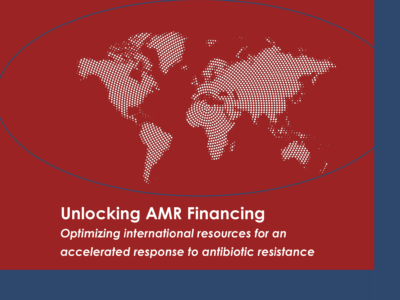
Antibiotic resistance is one of the greatest global health problems, with far-reaching consequences if urgent action is not taken to prevent a post-antibiotic era. Within the broader concept of antimicrobial resistance (AMR), resistance to antibiotics is the greatest and most urgent global risk. Yet, funding and coordination for action remain far behind the scale of the challenge. A new ReAct analysis and policy brief highlights persistent barriers that hinder countries from optimally accessing and using international financing to implement their National Action Plans on Antimicrobial Resistance (AMR NAPs). It also identifies opportunities to make global AMR financing more coherent, efficient, and accessible, and outlines pathways to strengthen global mechanisms for more coordinated and effective AMR funding.

Faith based organizations
A new policy brief launched during a High-Level global dialogue underscores the indispensable role of faith-based organizations in addressing antimicrobial resistance, one of the most urgent and complex public health threats of our time. Convened by the World Council of Churches, the dialogue brought together global health leaders, policymakers, and faith actors to explore how trusted community institutions can help strengthen AMR prevention, stewardship, and advocacy – particularly across Africa.
Collective action
The Uppsala Dialogue Meeting “The Global Need for Effective Antibiotics – Unlocking Barriers for Collective Action” from May 2023 deliberated on the needs for a common vision and was an early step to propose key components and steps to make the next AMR UN High-level Meeting in September 2024 successful.
The meeting days resulted in the ReAct Report: Unlocking Barriers for Collective Action.

Disparities
As the year ends, it’s time to reflect on the outcomes of the September 2024 UN General Assembly High-Level Meeting on antimicrobial resistance (AMR) in New York. While the Political Declaration advanced the agenda, the From People to Leaders: Act on AMR NOW! event highlighted structural inequities in representation, especially for low- and middle-income countries. In response, ReAct Africa and MUSUHUM’s new survey and policy brief call for urgent action to center these countries’ voices in the global AMR response.

Before UN HLM 2025
New ReAct briefing note out ahead of the UN General Assembly High-Level meeting on AMR in September, 2024.

UNHLM 2019
In 2019, ReAct and the South Centre jointly organized a conference in Nairobi, Kenya on ‘Achieving Universal Health Coverage while Addressing Antimicrobial Resistance’. Based on the insights from experts in antimicrobial resistance and universal health coverage from 33 different countries ReAct wrote a policy brief linking universal health coverage to antimicrobial resistance. The policy brief shows why antimicrobial resistance seriously threatens achieving universal health coverage, but also how their respective policies go hand in hand.

Financing
In December 2018, ReAct and the Dag Hammarskjöld Foundation hosted a meeting in Uppsala, Sweden, inviting around 20 experts in the field of antimicrobial resistance and global health, to discuss funding for the global crisis of antimicrobial resistance.
Communities
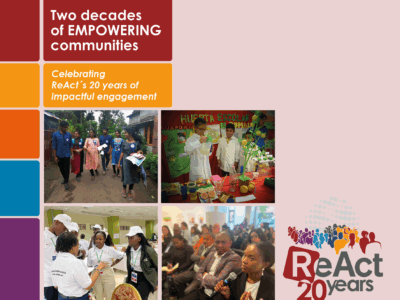
In 2025, ReAct celebrates 20 years of unwavering commitment to address antibiotic resistance by doing what few global health organizations dared to do early on: placing communities at the center of the solution. Today, we release a new report with key learnings and highlights from this journey.
In 2025, ReAct celebrates 20 years of unwavering commitment to address antibiotic resistance by doing what few global health organizations dared to do early on: placing communities at the center of the solution. Today, we release a new report with key learnings and highlights from this journey.
Asia Pacific
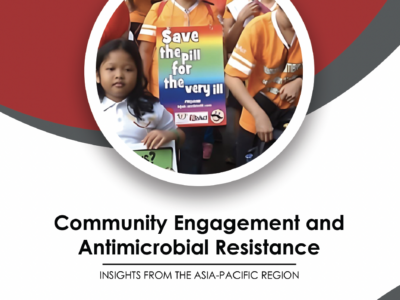
A new report by ReAct Asia Pacific highlights the critical role of community engagement in addressing these challenges, particularly in low- and middle-income countries. The report is based on a preliminary desktop review of selected literature and interviews with civil society organizations and researchers working on community engagement in health and antimicrobial resistance.
Communities
In the fall of 2023, ReAct, Uppsala Antibiotic Center and Antibiotic Smart Sweden initiated an educational webinar and workshop series for promoting a systematic and meaningful engagement of communities and civil society groups as key stakeholders in the global response to antibiotic resistance. Now the collaboration releases a summary report from the initiative this far.

Sepsis and children
ReAct conducted a web-based survey in 2020 aiming to understand the awareness, availability of guidelines, general practice and potential challenges physicians face around neonatal sepsis and antimicrobial resistance. Over 400 responses from 74 countries were received. Report in English and Spanish.

Gender
Sex and gender is important to consider in enhancing the understanding of the ‘human face’ of antibiotic resistance and antibiotic use, and how it affects a variety of people in different ways throughout their daily lives. ReAct now issues a report that explores the ways in which sex and gender interact with antibiotic resistance and makes the case for all actors engaged in addressing antibiotic resistance to undertake further work in this area.

Cancer
Antibiotics are instrumental for patients undergoing chemotherapy and surgery, and have paved the way for modern cancer care. Cancer patients often need antibiotics multiple times during the course of cancer treatment, which is why antibiotic resistance is seriously threatening patient outcomes. In ReAct’s new policy brief, you will learn more about the links connecting effective antibiotics and cancer care, and why urgent action on antibiotic resistance therefore is needed.
The increasing global crisis of antibiotic resistance demands urgent and multi-faceted solutions, yet a less recognised driver of resistance is pollution from antibiotic production. Waste from manufacturing sites can create hotspots of resistance, disproportionately affecting low- and middle-income countries. This policy brief addresses the intersection of environmental pollution, antibiotic resistance, and equitable access to antibiotics, offering practical recommendations for systemic change.

Food animal
While a significant role in the spread of antibiotic resistance has been observed by the growing use of antimicrobials in the human health sector, in recent years there has been recognition of the problems arising from even greater use of these drugs in food-animal production.
Antimicrobial use in food-animal production. Problems, solutions, challenges (PDF, 800 kB).

SDGs
This report by ReAct and Dag Hammarskjöld Foundation looks at the state of global development when the drugs don’t work and a post-antibiotic era sets in. The report shows how antibiotic resistance is a global development problem by highlighting existing data and people’s experiences.
R&D
End 2022, ReAct Europe initiated the project REMAAP (Revisiting Effective Models to Advance the Antibiotic Pipeline) to find ways how to best reinvigorate the antibiotic pipeline with a public health interest in focus. Now the REMAAP initiative is publishing a new Expert Policy Brief: Identifying key bottlenecks in the early stages of antibiotic R&D and exploring public and not-for-profit solutions. In this article you find the brief and five takeaways from a two-day expert workshop held 7-8 November 2022, including suggested ways forward.
End to end
The ReAct Europe report “Ensuring sustainable access to effective antibiotics for everyone, everywhere – How to address the global crisis in antibiotic Research and Development” includes a comprehensive summary and critical evaluation of recent initiatives to overcome the barriers to achieve sustainable access to antibiotics. As antibiotic resistance will continue to develop as long as we depend on these medicines to treat bacterial infections, a continuous supply of new effective antibiotics is needed.

R&D

Access
Over the last five years, numerous investments have emerged to address the lack of novel antibiotics that are urgently needed to address drug-resistant infections.
ReAct has welcomed these efforts to address this market failure. Yet we are concerned that these efforts may not achieve the desired outcome of creating a sustainable new approach to antibiotic research and development.
