
Automatic translation by Google. Limitations and info.
New release!
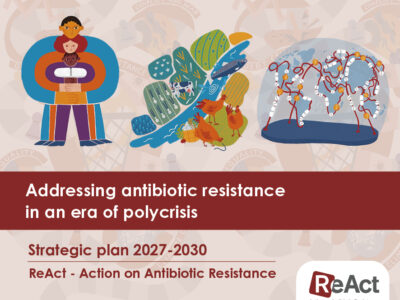
ReAct’s new strategic plan sets out how we will work to address antibiotic resistance in a world increasingly shaped by interconnected global challenges, including climate change, debt crises, growing inequality, armed conflicts, and weakened multilateral cooperation.
Recognizing that these crises are deeply linked and place growing pressure on health systems and societies, the plan focuses on three strategic priorities. Click to read more.

Policy
On 1 October, the AMR Multi-Stakeholder Partnership Platform convened global multi-stakeholder consultations on the Abuja Compact together with the Government of Nigeria, host of the upcoming Ministerial Conference on Antimicrobial Resistance in December.
ReAct took the floor at the consultations, building on the detailed written submissions we sent in beforehand.
ReAct stories
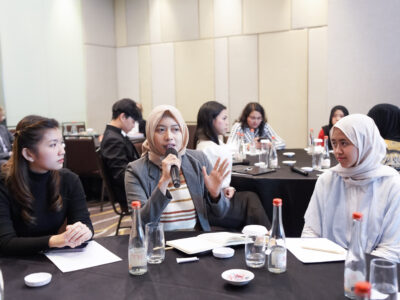
Sarah Rauzana, member of the Asia Pacific Youth AMR Task Force talks about why antimicrobial resistance (AMR) needs to move beyond the health sector, what environmental advocates can bring to the One Health conversation, why vulnerable communities must be at its centre, and how young people across the region can build a lasting movement against AMR.
Release
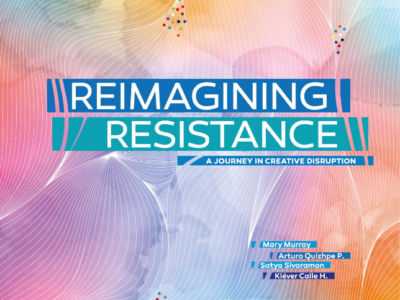
The publication “Reimagining Resistance: A Journey in Creative Disruption” documents an intellectual and practical journey that began by questioning the language of AMR and evolved into a wider exploration of the relationships between humans, microorganisms and the living world.
News
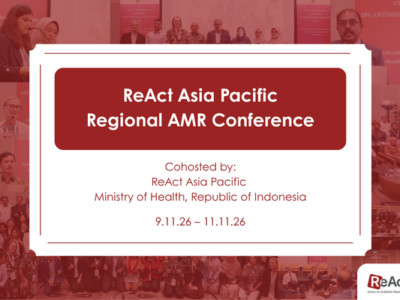
The Asia-Pacific region carries a disproportionate share of the global burden of AMR and includes countries with widely differing health system capacities, financing environments, epidemiological profiles, and implementation challenges.
The coming ReAct Asia Pacific Regional AMR Conference in November has an important role to play.

ReAct Stories
Sunanda’s Nadarajan organization Ek Jeevan Hamari Prerana focuses on livelihood support, skill development, literacy, and health awareness. In partnership with ReAct, she has led a community-based antibiotic resistance awareness program targeting women and young people.

News
On 2–3 September, ReAct Europe took part in an international conference on the recovery and modernisation of Ukraine’s healthcare system – Ukraine ReHealth 2026 – as part of its collaboration supporting Ukraine’s National Action Plan on AMR.
News
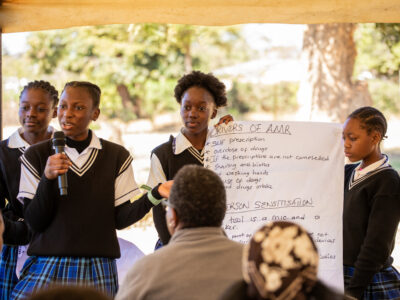
Children are often viewed as the beneficiaries of public health interventions, with adults making decisions on their behalf.
Yet, children are key stakeholders in their own right, capable of understanding health challenges, contributing solutions and influencing behaviours within their families, schools and communities.

News
ReAct Latin America brings a complex public health challenge to life through theatre, puppets and the adventures of two unconventional detectives.
Webinar
On 15 September 2026, the Antimicrobial Resistance Multi-Stakeholder Partnership Platform (AMR MSPP), in collaboration with ReAct, convened a webinar to bring community and civil society perspectives into global discussions on antimicrobial resistance (AMR).
ReAct Story
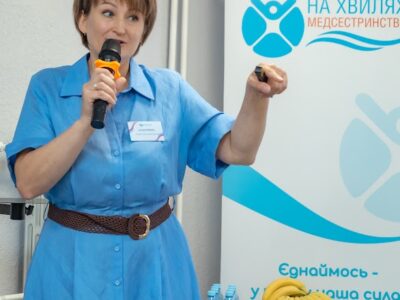
Alla Kuzhel is Chief Nurse at the Municipal Non-Profit Enterprise “Children’s City Polyclinic No. 6” of the Odesa City Council. She is also a facilitator of peer support groups and curator of the project On the Waves of Nursing. Alla participated in ReAct’s online training on infection prevention and control in late 2025, and ReAct is looking forward to ways to collaborate.. In this interview, she shares her insights on addressing antibiotic resistance in Ukraine, a country currently facing the challenges of ongoing conflict.
Webinar
ReAct, in collaboration with the Multi-Stakeholder Partnership Platform (MSPP), will host a webinar on 15 September 2026 (14:00–15:30) titled “From People to Leaders: Translating Community Priorities into Political Commitments.”

Policy
The upcoming High-Level Meeting (HLM) on Pandemic Prevention, Preparedness and Response (PPPR) at the 81st UN General Assembly this September marks a critical juncture for reviewing global progress since the 2023 political declaration.
The meeting also presents a timely opportunity to revisit the implications of the 2025 Pandemic Agreement – specifically, how to actually operationalize the inclusion of AMR in the provisions for key areas such as prevention and surveillance, but also in relation to equitable access to medicines.

News
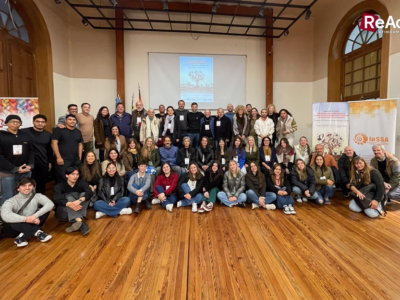
The ReAct Africa Annual AMR Conference 2026, held on 21–22 July in Lusaka, Zambia, brought together nearly 200 participants from 35 countries to advance practical, people-centred solutions to antimicrobial resistance (AMR).
Participants represented governments, academia, health professionals, civil society, communities, youth and faith actors, development partners, and stakeholders from animal health, agriculture and the environment.
Release

News
This September, 50 nurses from across Ukraine will participate in a new course on infection prevention and control (IPC) and antibiotic resistance. Developed by ReAct Europe in partnership with ZDOROVI, the course aims to strengthen nurses’ knowledge and practical skills to enhance patient and staff safety and promote knowledge exchange.

News
For three days, Cuenca became a meeting space for academia, social organizations, public institutions, communities, agricultural producers, university students, teachers, children, youth, and older adults from Ecuador, Argentina, Colombia, and Peru. Bringing together diverse backgrounds and experiences, participants shared knowledge, reflections, and proposals centered around the educational garden as a space to learn about the microbial world and its relationship with soil, food, and health.

ReAct Story
Diego Quijano is an environmental and sanitary engineer, public health researcher, and environmental professional from Colombia. He holds a Master’s degree in Environment and Development and a PhD in Public Health from the National University of Colombia. Currently serving as a Technical Liaison at Bogotá’s District Secretariat of Environment, his work focuses on the intersection of health and the environment, particularly emerging contaminants and the environmental impacts of pharmaceutical pollution. In this interview Dr Quijano talks about his work and association with ReAct Latin America.

News
The 5th Global High-Level Ministerial Conference on Antimicrobial Resistance, scheduled for 28–30 June 2026 in Abuja, Nigeria, has been postponed. The postponement comes after months of active discussion within the AMR community about what this meeting could and should deliver.
We hope a new date will be agreed soon. The circumstances behind the postponement have not been fully clarified and raise an important question: how resilient and robust the global AMR governance system is when political processes are interrupted?

News
A global survey and webinar reveal a clear message ahead of Abuja: communities want financing, accountability and a meaningful role in decision-making.

Policy
On the sidelines of the 79th World Health Assembly, ReAct with support from the Health Diplomacy Alliance and Global Challenges Foundation convened a roundtable at the Health Diplomacy House to tackle some of the most pressing hurdles in the global response to antibiotic resistance. Titled “Closing the Gap: Governance and Financing for an Effective Global Response to Antibiotic Resistance,” the session aimed to foster a solution-oriented dialogue and gathered around 20 invited experts representing the civil society, member states, academic institutions, and international organizations.

News
We are proud to share ReAct 2025 Impact Report, highlighting key achievements from across the ReAct network over the past year.
In 2025, we also marked an important milestone: 20 years as a global network working to ensure equitable access to effective antibiotics for all. This work has always been collective, and we could not have done it alone. Our sincere thanks go to communities, civil society organizations, individuals, institutions, and donors who contributed to and been engaged in our work in 2025 – and throughout the past two decades.

Webinar
Join ReAct’s webinar on 8 June as we look ahead to the 5th Global High-Level Ministerial Conference on AMR in Abuja, Nigeria.
The event will present findings from ReAct’s global community survey and bring together speakers for two panel discussions on how community voices can help drive stronger action on antibiotic resistance.

Policy brief
Antibiotic resistance is a global catastrophic risk already causing over 1.1 million deaths annually and threatening global health and economic development. ReAct’s latest policy brief, From Dialogue to Progress, argues that while the global governance architecture has expanded, the current system remains fragmented with unclear mandates, funding shortages, and significant accountability gaps.

News
Antibiotic Smart Sweden is a collaborative initiative that aims to inspire and engage all parts of society in addressing antibiotic resistance. Its vision is a society where everyone helps to keep antibiotics working and saving lives. In mid-May, the initiative awarded “Antibiotic Smart” diplomas to 36 facilities, which join another 40 facilities that reached this milestone in 2025.
ReAct Europe is one of the core partners in this initiative.

ReAct Story
In this interview, Dr. Ismael A. Sharot explains how Nybro Health Centre became Sweden’s first primary health care clinic to receive an antibiotic-smart diploma through data-driven decisions, strong team collaboration, and a shared commitment to change. He also reflects on the challenges of changing clinical routines and reducing antibiotic prescribing rates in everyday practice.

News
The First Festival of Children’s Ensembles and Orchestras brought together communities, schools, families, and social organizations in Quito, Ecuador, through an educational initiative that connects art, the microbial world, and the One Health approach.

Policy
At the 79th World Health Assembly (WHA79), ReAct Africa and the World Council of Churches convened a side event titled “Bridging the AMR Divide: Equity, Access, and Community-Led Solutions.”
The dialogue brought together voices from global health institutions, faith-based organisations, civil society, and community-centred networks to examine a critical but often under-addressed dimension of antimicrobial resistance (AMR): equity.

News
From April 21 to 27, the Colombian city of Medellín hosted the “VII Latin American and Caribbean Congress of Community Living Cultures”. The gathering brought together more than 450 artists, collectives, and organizations from 23 countries across the region to strengthen social participation in health, popular education, peacebuilding, and advocacy for cultural public policies.

Abuja Ministerial Meeting
The upcoming 5th High Level Ministerial Meeting on AMR held in Abuja, Nigeria in June 2026 should serve as a political turning point for renewed ambition, reinforced accountability, and accelerated implementation. Here ReAct outlines recommendations for ministerial action centered around four key themes: financing, governance & accountability, community and civil society engagement, and finally equitable access to AMR countermeasures.

ReAct Story
Meet Ndahafa Imene. Her journey as a medical laboratory scientist began with a simple curiosity to find out what happens to a patient sample after it is collected. This drive to understand the microscopic processes behind a diagnosis led her to the laboratory and a career as a research assistant for the Global Health Protection Program.
Now a participant in the Antimicrobial Resistance Leaders Program (AMRLEP), Ndahafa is turning her scientific expertise into leadership. In this interview, she shares her path to the frontlines of AMR stewardship and her vision for driving global change.

News
Antimicrobial Resistance (AMR) affects everyone, everywhere. This global health threat has detrimental effects across human and animal health, agriculture, and the environment, rivalling traditionally important and urgent global health diseases such as HIV, TB, and malaria in terms of the mortality rates recorded in its wake. Addressing a challenge of this scope and complexity transcends technical strategies and solutions. It requires a coordinated, whole-of-society response to bridge the gap between global, regional, and national strategies and community realities.

Policy
As the global health community prepares for the upcoming World Health Assembly next month, an important moment is approaching. Member States are expected to adopt the updated Global Action Plan on Antimicrobial Resistance. For young people working in health, policy, and advocacy, this is not just another agenda item. It is a chance to stay engaged with a process that will shape how countries respond to the “(not-so-silent anymore) pandemic” for years to come.

News
The National University of Mar del Plata (UNMDP), in partnership with ReAct Latin America, has approved the Extension Diploma “Educational Knapsack for School Health and the Microbial World: Caring for Planetary Health.” The program began in April 2026 and is aimed at educators, health professionals, and community workers.

Open position
ReAct is now looking for a visionary and experienced director to lead the work of the ReAct Latin America node.
As Director of ReAct Latin America, you set out the direction and have a strong strategic sense for how to best catalyze action on antibiotic resistance at different levels of society in the region, guided by a One Health approach.

Survey!
Meaningful progress on AMR depends on strong community input. As governments prepare for the 2026 Ministerial Conference in Abuja, ReAct invites you to share your perspectives through the “From People to Leaders: Road to Abuja 2026 – Community Priorities Survey.

Conference
The ReAct Africa AMR Conference 2026 will take place 21–22 July in Lusaka, Zambia, bringing together policymakers, researchers, civil society leaders, and global health experts committed to addressing antimicrobial resistance (AMR) in Africa.

News
The first Regional Meeting on Antimicrobial Resistance (AMR) in Latin America and Caribbean from 24-27 March in Brasilia, Brazil, represents a pivotal moment for integrating grassroots action into high-level policy in the region.
For ReAct Latin America the meeting, organized by the Brazilian Ministry of Health, is an opportunity to position the node’s “Empowered Communities” initiative and Alforja Educativa as primary strategies for containing AMR from a One Health perspective.
Policy brief
Released in conjunction with the 1st Regional AMR Meeting in Brazil in March 2026, a new policy brief by ReAct Latin America and Idec (the Brazilian Institute for Consumer Defense) calls for a sustainable and inclusive roadmap to address the escalating threat of antibiotic resistance in the Americas.

ReAct Story
One ordinary morning at a school in Ecuador, a group of children carefully water small sprouts of mint and radish. Before doing so, they pause for a moment to ask Mother Earth for permission. Watching the scene closely is Belén Juca, a General Basic Education teacher.
This is part of the AlForja Educativa program initiated by ReAct Latin America.

Communities
In Jahangirpuri, an urban resettlement slum in New Delhi, India, women are quietly reshaping how antimicrobial resistance (AMR) is understood and responded to at the grassroots. A small group of women volunteers has recently come together under the Antibiotic Smart Community initiative.

Early February, during the 158th session of the WHO Executive Board, Member States were expected to adopt an updated version of the Global Action Plan on Antimicrobial Resistance, but the process hit a deadlock over the proposed language on technology transfer. Negotiations will be reopened on limited parts of the text ahead of the World Health Assembly in May.

More than 35,000 people die each year in the EU/EEA as a result of infections caused by antibiotic-resistant bacteria, highlighting a growing threat that reflects global trends.
In this context, the EU Joint Action on Antimicrobial Resistance (EU JAMRAI 2) held a meeting at the end of January, bringing together representatives from EU Member States, Norway, Iceland, Ukraine, and more than 130 partner organizations worldwide.
Click to read reflections from Anna Sjöblom, Director ReAct Europe, who participated in the meeting days.

From January 26 to 29, the final global convening of the “Just Transitions for AMR” group took place at the Tropical Agricultural Research and Higher Education Centre (CATIE) in Costa Rica. This international event was organized within the framework of the British Academy’s Global Convening Program 2026, in coordination with the University of Oxford.
ReAct Latin America contributed with community-led solutions to the meeting.

Aquaculture supplies more than half of the world’s seafood and plays a critical role in food security, livelihoods, and nutrition – particularly in low- and middle-income countries.
Yet the rapid expansion and intensification of fish and shrimp farming has also brought growing challenges, including infectious disease outbreaks and the widespread use of antibiotics.
These dynamics make aquaculture a key, and often under-addressed, front in the global action to contain antibiotic resistance, and more broadly, antimicrobial resistance.

Although global policy commitments and technical knowledge have expanded significantly, a persistent gap remains between political declarations and effective implementation. Bridging this gap requires sustained platforms that enable interdisciplinary dialogue, knowledge exchange, and collaborative governance across sectors and regions.
In this context, ReAct Asia Pacific organized a regional meeting September 2025, now you can learn more about the days and access the meeting report.

A new policy brief launched during a High-Level global dialogue underscores the indispensable role of faith-based organizations in addressing antimicrobial resistance, one of the most urgent and complex public health threats of our time. Convened by the World Council of Churches, the dialogue brought together global health leaders, policymakers, and faith actors to explore how trusted community institutions can help strengthen AMR prevention, stewardship, and advocacy – particularly across Africa.
As we mark World Cancer Day 2026 under the theme “United by Unique” we must confront an often-overlooked but critical threat to cancer care: antibiotic resistance. While global efforts rightly focus on expanding access to early diagnosis, treatment, and palliative care, the silent crisis of antibiotic resistance is undermining the very foundation of modern oncology. For millions of cancer patients worldwide—especially those undergoing chemotherapy, surgery, or stem cell transplants—effective antibiotics are not just supportive care; they are lifesaving.
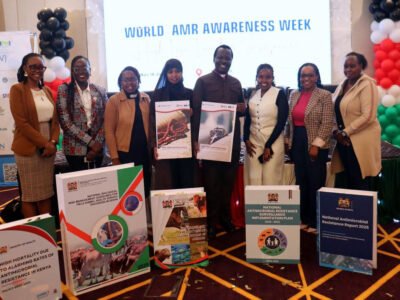
Antibiotic resistance is one of the most pressing public health threats facing Africa today. Its drivers including misuse of antibiotics, self-medication, and improper disposal of medicines are deeply rooted in community practices. This makes community engagement essential. Faith-Based Organisations (FBOs), among the most trusted and far-reaching institutions across the continent, are uniquely positioned to influence behaviours, shape values, and extend health messages into households and communities that formal health systems may not consistently reach. Engaging faith leaders therefore strengthens public understanding of AMR and supports lasting behaviour change.

On 28 December 2025, India’s Prime Minister Narendra Modi used his ‘Mann Ki Baat’ (Speaking my Mind) broadcast to reach millions of Indian households to deliver a direct public message on antimicrobial resistance. Drawing on evidence from the Indian Council of Medical Research (ICMR), he cautioned citizens against “mindless” self-medication with antibiotics and emphasized that these medicines should only be taken on a doctor’s advice. By citing specific ICMR data through a platform known for its personal, conversational tone, Prime Minister Modi shifted antimicrobial resistance from the confines of microbiology laboratories and policy documents into public consciousness – a turning point that has positioned antibiotic stewardship as both a personal and collective responsibility.

Antibiotic resistance is a growing, cross-sectoral challenge that risks derailing progress across the Sustainable Development Goals. To help bridge policy silos and advance more coherent responses, ReAct Europe is leading a new project within Uppsala University’s newly established interdisciplinary research institute, UUniCORN. The BRIDGE-ABR project brings together researchers and practitioners to identify policy goal conflicts and generate integrated solutions that strengthen both antibiotic resistance mitigation and sustainable development outcomes.

ReAct Latin America celebrated the ReAct network’s twentieth anniversary with a regional commemorative anthology that brings together almost two decades of participatory research-action addressing antibiotic resistance in Latin America. The regional anthology includes materials, approaches, and methodologies collaboratively developed with diverse social and academic sectors, with the aim of fostering new paradigms, actions, policies, and practices based on the advances, lessons learned, and ongoing challenges of this global health issue. For the release many collaborators from the region was invited to celebrate.