
2026-07-23
Sunanda Nadarajan is the founder of Ek Jeevan Hamari Prerana ("Every Life Is an Inspiration"), a non-governmental organization based in Delhi, India, that works with women and children affected by HIV. Operating in Jahangirpuri, one of the largest slum settlements in the city, home to more than 20,000 families. Sunanda's organization focuses on livelihood support, skill development, literacy, and health awareness. In partnership with ReAct, she has led a community-based antibiotic resistance awareness program for women and young people.
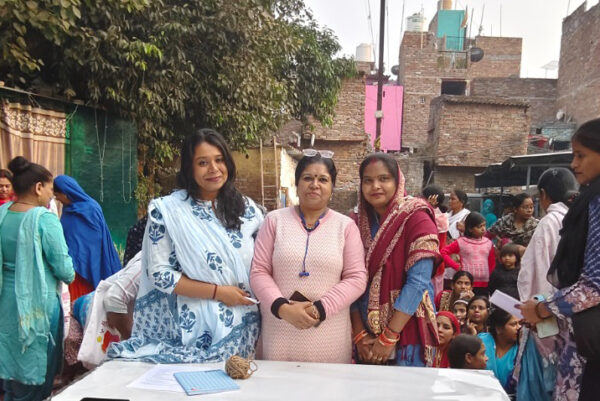
Can you tell us about your organization and the communities you work with?
– My organization is called Ek Jeevan Hamari Prerana. It is a Hindi name, meaning “every life is an inspiration.” We work primarily with women and children affected by HIV. Our main activities are livelihood support for women, helping them make products that we then market on their behalf, and skill development training for children and youth.
– We work in Jahangirpuri, which is one of the biggest slum areas in Delhi. There are more than 20,000 families living here. We have reached about 5,000 families through surveys so far. Beyond livelihood, we also run awareness sessions on hygiene and HIV, and we also introduced literacy classes, because we found it was very difficult to conduct sessions with women who could not read or write.
How did you first encounter the issue of antibiotic resistance?
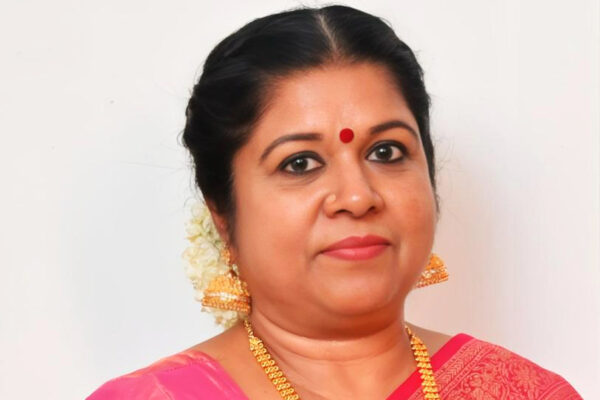
– I had heard of it, but not deeply. I am also living with HIV myself, for 20 years, and whenever I get sick, usually with a cough in winter, I would go to the doctor and receive antibiotics. In the past, I would stop taking them after two or three days once I felt better. My doctor would tell me that if I skip the medicine, next time it may not work in my body. That was my personal experience with resistance, but I did not fully understand what was happening biologically.
– When the AMR program started with ReAct, I learned about it in depth – how bacteria become resistant, which infections are affected, how resistance spreads. That deeper understanding was genuinely new for me.
Before the program began, what was the typical pattern of antibiotic use among families in Jahangirpuri?
– Self-medication from chemist shops is the default. When someone in the family is sick – a fever, a small infection – they do not go to a hospital. Hospitals mean long queues, time for tests, waiting. So, people go directly to a medical shop and buy whatever the pharmacist suggests or whatever they remember taking before.
– Even when they do visit a doctor and receive a prescription, most people stop taking the medicine after two or three days, once they feel comfortable. They do not see the need to finish the course. This happens constantly.
– There is also a pattern of hospital-switching. If someone does not feel better within two or three days at one facility, they leave and go to another hospital, which means starting a new treatment cycle entirely.
How did you design the AMR awareness program?
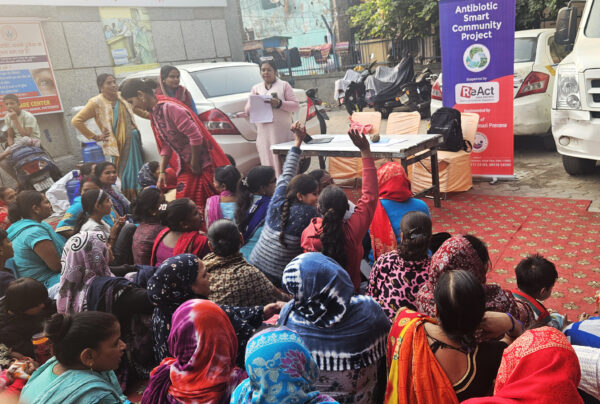
– We formed two groups: one for women, one for young boys, with 25 participants in each group, so 50 in total. Trained peer educators entered the community to facilitate sessions. We ran one session per week with each group.
– We started with a pre-questionnaire to assess baseline knowledge: what do they know about antibiotics, when do they use them, how do they use them. We gave small gifts to participants who answered correctly: coffee mugs, water bottles, small bowls. That brought people in initially. But as the sessions continued and we stopped giving gifts, attendance did not drop. Women kept coming and brought others with them. They said: “We were never told how to maintain our health. This is something we never had before.”
– We are now preparing a post-questionnaire session for all 50 women to measure how much their knowledge has changed.
What were the most eye-opening moments from the sessions: for the women, and for you?
– The connection between hygiene and antibiotic use was the biggest revelation. We were not only talking about medicine. We talked about water quality, handwashing, cleaning during menstrual periods, washing vegetables properly.
– Before the sessions, women were using whatever water they received directly: for cooking, washing clothes, washing vegetables, everything. After the sessions, they started boiling water before using it for food. That was a real behavioural change, not a small one.
– Another shift: women began identifying which chemist shops dispense antibiotics without a prescription and started talking about it among themselves. That kind of accountability within the community was something we did not script. It emerged organically.
– The hospital-switching behaviour also became clearer. Women began to understand why finishing a prescribed course matters and why switching hospitals mid-treatment is harmful. They started telling each other: if the doctor said seven days, wait for seven days.
What is your plan for sustainability?
How do you ensure the behaviour changes hold?

– We cannot just conduct sessions and leave. We have reached 50 women, which means roughly 200 family members if you calculate an average household. But there are 20,000 families in Jahangirpuri. That gap is enormous.
– Immediately, we are extending sessions to new areas and connecting with other agencies and funders to support small ongoing activities. Our upcoming plan is to organize a community meeting with decision-makers: the local MLA, hospital doctors, and chemist shop owners. The 50 women we have trained will attend the event and share their experiences and key learning from the sessions. In our last meeting with officials, only two or three doctors came.This time, we have 50 participants who can speak from their own experience. That changes the dynamic.
– On hygiene as a structural issue: last year, Jahangirpuri flooded because drainage channels were blocked with plastic waste and vegetable peels. We used that to teach why hygiene is everyone’s responsibility, not only the government’s. But we also need the government to maintain water supply and drainage infrastructure. Both sides have to move.
What message would you send to policymakers about AMR and public health?
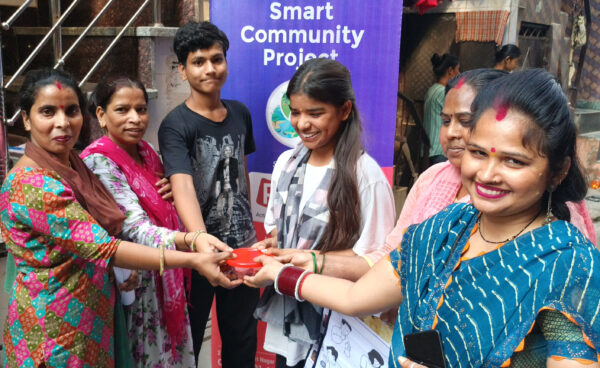
– Regular, structured community meetings between local decision-makers and residents should be organized to improve collaboration and address gaps in maintaining hygiene in public spaces. At a minimum once every three or six months. If a non-governmental organization is active in the area, it should take responsibility for organizing these meetings.
– Communities like Jahangirpuri face real and specific challenges, such as contaminated water and blocked drains. Due to a lack of awareness and information, many residents are unable to access the appropriate government channels to report and resolve these issues.
– If trained community women can sit in those meetings and speak on behalf of their neighbourhoods, changes will happen faster. The mechanism matters as much as the message.
What are your next steps with ReAct?
– We are planning a multi-stakeholder session session, bringing together the women we have trained, health workers, ASHA workers, hospital doctors, and chemist shop owners. We will present what we did, what changed in the community, and make the case for why this program needs to scale and continue.
– The scale issue is real. We have reached 200 families out of 20,000. Changing behaviour takes time. It is not one session, not one year. It is continuous engagement. People need to hear the same things repeatedly, in different ways, before they internalize them and change how they live. That is the nature of this work.
Antibiotic Smart Communities
Initiated by ReAct Asia Pacific in 2018, the Antibiotic Smart Communities project utilizes a bottom-up, community-led strategy to address antibiotic resistance by empowering local self-governing institutions and mobilization networks.
Moving away from traditional top-down national plans, the project focuses on mapping local non-domestic antibiotic use sites through GIS technology, conducting comprehensive community surveys, and executing stakeholder focus group discussions. Central to its design is a specialized 15-indicator framework that measures “antibiotic smartness” across multiple critical domains, including human health, hygiene infrastructure, animal husbandry, and environmental waste management.
The project successfully developed and published its multi-sectoral metric methodology as a practical handbook after refining a comprehensive list of 34 initial metrics down to 15 prioritized indicators with the help of global experts. Its core feasibility was validated through pilots across five diverse regions in India, including Himachal Pradesh, Assam, Bihar, and Kerala.
Notably, in a pilot community of 11,000 residents in Kerala, India, the framework was used to design a targeted “action agenda” consisting of 12 context-specific interventions- such as constructing soakage pits and demonstrating biosecurity measures for farmers. Following six months of these targeted local actions, the community’s antibiotic smartness score successfully rose from an initial 34/45 to 38/45.
The initiative has also been piloted in Indonesia and now in Jahangirpuri, India.
Read: ReAct Asia Pacific: Antibiotic Smart Communities as a way forward.
Handbook for Antibiotic Smart Communities Framework.
Read also: Mobilizing communities to act on antibiotic resistance.
More from "2026"
- From fighting bacteria to dancing with life
- New ReAct Strategic Plan 2027–2030: Addressing antibiotic resistance in an era of polycrisis
- Abuja Compact: 4 key areas to carry commitments forward
- Maarifa Kids Zambia: Children as key AMR stakeholders
- ReAct Europe at Ukraine ReHealth 2026: Building resilient healthcare in times of war
- From people to leaders: strengthening community voices in the AMR response
- A detective story: Who Killed the Rational Use of Medicine?
- From People to Leaders: Bridging community priorities and global action ahead of Abuja 2026
- Six key takeaways from ReAct Africa Annual AMR Conference 2026
- Beyond diplomatic aspirations: Bridging the implementation gap in Pandemic Preparedness and AMR
- Connecting environment, AMR and youth action: meet Sarah Rauzana
- ReAct Asia Pacific Regional AMR Conference 2026 in November!
- Ukrainian Chief Nurse Alla Kuzhel: “Antibiotic resistance is not a problem of the future”
- Launch of book on “Reimagining Resistance: A Journey in Creative Disruption”
- Closing the gap: Highlights from the ReAct side event at the 79th WHA on AMR governance and financing
- New IPC and antibiotic resistance course for 50 nurses from Ukraine!
- “Every life is an inspiration”: Community-led antibiotic resistance awareness in Delhi’s slums
- From People to Leaders: Why communities must shape the future of AMR governance
- Abuja meeting postponed: a moment to close the gaps before ministers reconvene
- From rivers to resistance: Dr Diego Quijano on the environmental dimension of AMR
- International gathering on educational gardens, microbiome and AMR
- Bridging the AMR divide: Reflections from the WHA79 side event on equity, access, and community-led solutions
- ReAct’s 2025 Impact Report: From grassroots action to global policy
- Art and bio-solidarity in response to AMR
- Dr. Sharot leads the first antibiotic-smart primary health care center in Sweden
- Addressing AMR through art, childhoods and One Health
- Over 70 antibiotic-smart facilities in two years!
- Webinar and survey: From People to Leaders: Community voices shaping Abuja 2026
- From dialogue to progress: Strengthening global AMR governance
- Why the IPEA matters now: A Policy Brief for Member States
- Extension diploma in Educational Knapsack for Planetary Health
- From the World Health Assembly to the communities: Why youth must show up for the next Global Action Plan on AMR
- Ndahafa Imene: Turning curiosity into action on AMR
- Uniting Voices for Action: Inside the WHO Civil Society Task Force on AMR
- The Abuja High-Level Ministerial meeting: a chance to renew ambition and improve accountability to make the global response to antibiotic resistance more effective
- ReAct Europe at the 2026 Nobel Prize Teacher Summit: Global health in focus
- Securing the future of health: ReAct Latin America and Idec propose a new regional strategy for the Americas
- World Health Day: Reflecting on the penicillin revolution
- Reimagining AMR action through community voices: Lessons from Jahangirpuri, New Delhi, India
- Share your perspective: Community priorities survey for the Abuja 2026 AMR Ministerial Meeting
- Belén Juca: When the garden becomes a classroom for AMR
- ReAct at first Regional Meeting on AMR in Brasilia
- Faith Based Organizations: Critical allies for stronger action on AMR
- From Declaration to Action: Insights from the ReAct Asia Pacific 2025 Conference Report
- Antibiotic resistance and aquaculture: Why It matters for One Health
- Revised Global Action Plan on AMR delayed over technology transfer language
- Reflections from the EU JAMRAI2 Annual Meeting
- ReAct Latin America at global AMR Summit in Costa Rica
- A regional anthology: 20 years of action on antibiotic resistance
- Mobilizing faith-based organizations to address antibiotic resistance in Africa
- India’s AMR Response: High-level leadership and Implementation challenges
- Protecting cancer care in the age of antibiotic resistance
- BRIDGE-ABR: A ReAct-led collaboration on goal conflicts, antibiotic resistance and sustainability