
2026-08-15
The launch of the book "Reimagining Resistance: A Journey in Creative Disruption – Reimagining Resistance: A Journey in Creative Disruption" became the centerpiece of the international seminar "Healthy Agrifood Systems and Antibiotic Resistance" held in Rosario, Argentina from 16-18 June.
More than the presentation of a new publication, the event represented the consolidation of over two decades of scientific collaboration and creative innovation dedicated to transforming how antibiotic resistance is understood and addressed in Latin America and beyond.
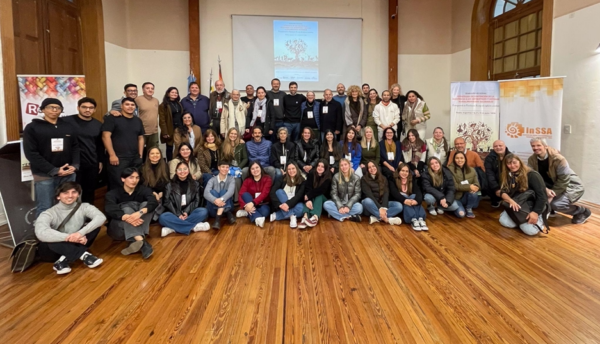
The seminar brought together nearly 150 researchers, health professionals, educators, agroecological producers, artists, students, and representatives of organizations and institutions from Argentina, Brazil, Colombia, Ecuador, and Uruguay. Organized by the Institute of Socio-Environmental Health (InSSA), the Brazilian Institute for Consumer Defense (IDEC), the Union of Scientists Committed to Society and Nature in Latin America (UCCSNAL), and ReAct Latin America, the meeting created an interdisciplinary dialogue that situated antibiotic resistance as an expression of the contemporary polycrisis, where health, environmental, climate, food, and social crises converge.
Launching a new conversation on antibiotic resistance
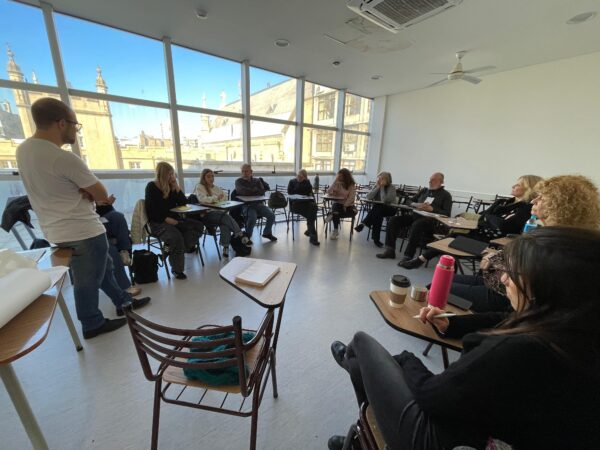
At the heart of the seminar was the discussion of “Reimagining Resistance: A Journey in Creative Disruption”, a book that synthesizes years of scientific inquiry, community engagement, and interdisciplinary collaboration. Drawing on advances in microbiome research, microbial ecology, systems thinking, public health, education, and the arts, the book argues that antibiotic resistance cannot be addressed solely through the development of new medicines or improved clinical practices. Instead, it calls for a fundamental shift in perspective that recognizes antibiotic resistance as a symptom of broader ecological and social imbalances affecting human, animal, and environmental health.
The book proposes a new paradigm that recognizes the microbiome as a foundation of health, makes visible the ecological relationships that sustain life, promotes transitions toward sustainable and healthy agrifood systems, and places communities at the center of the search for solutions. Combining scientific evidence with artistic expression and practical experiences from across Latin America, it presents an innovative vision for transforming research, education, communication, and public policy in response to one of the greatest challenges facing global health.
Throughout the seminar,articipants examined how new scientific knowledge about microbial ecosystems requires equally profound changes in the stories societies tell about health, nature, and coexistence. The meeting became a space for reimagining antibiotic resistance not as a problem to be fought through p perpetual warfare against microbes, but as an opportunity to restore balance between humans and the living world.
Why it’s time to dance with bacteria
One of the most influential concepts presented in the book is the metaphor “Dancing with Bacteria.” This invitation to move beyond narratives of war challenges decades of thinking that have defined humanity’s relationship with the microbial world. Instead of domination and permanent competition, the metaphor emphasizes balance, cooperation, and the extraordinary capacity of millions of visible and invisible organisms to sustain life through relationships of mutual dependence.
Grounded in advances in microbiome research, microbial ecology, and systems thinking, this perspective proposes understanding antimicrobial resistance as the expression of imbalances that simultaneously affect human, animal, and environmental health. By recognizing that health depends on balanced microbial communities and resilient ecosystems, it opens new possibilities for preventive strategies and broadens the horizons of public policy aimed at one of the greatest challenges in global health.
When science meets art
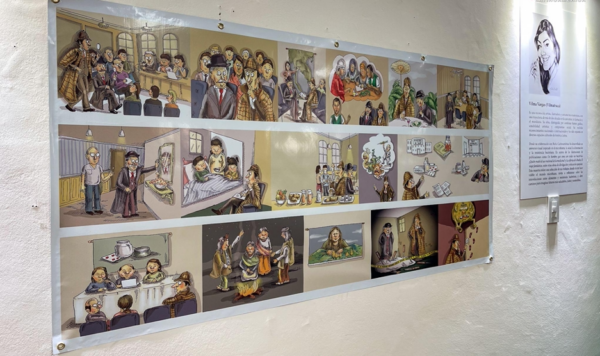
The seminar also demonstrated how this paradigm extends beyond scientific research. One of its distinguishing features was the integration of art as a language capable of expanding the understanding of complex phenomena and strengthening dialogue between different fields of knowledge. This approach reflects one of the principal methodological contributions developed by ReAct Latin America and the International Reimagining Resistance Group: recognizing that transforming scientific paradigms also requires transforming the narratives, emotions, and collective imagination through which societies understand health and life.
The exhibition “Making the Invisible Visible”, by Ecuadorian artist Vilma Vargas, invited participants to discover the fascinating world of microorganisms through an interactive augmented reality experience accessible by mobile phone. Together with the illustrations of Argentine physician and artist Gabriel Keppl, the exhibition transformed complex scientific concepts into an invitation to discover the invisible relationships that sustain life.
Musical performances by the School of Music of the National University of Rosario, together with audiovisual productions, further consolidated a space where science, art, and communication ceased to be presented as independent disciplines and instead became complementary dimensions of a shared process of knowledge creation. In this context, artists were recognized as fundamental actors capable of building bridges between the microbial world, communities, and human experience through languages that inspire reflection, sensitivity, and social commitment.
Celebrating the people behind a global movement
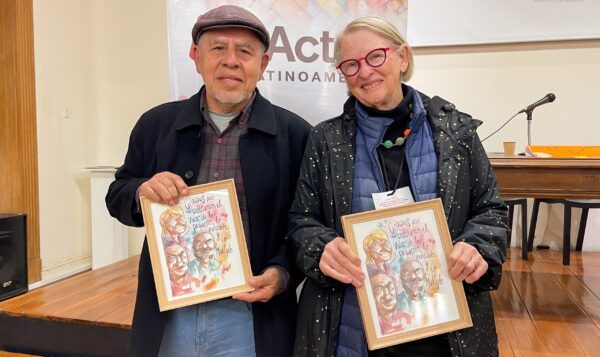
A highlight of the gathering was the tribute organized by the Institute of Socio-Environmental Health (InSSA) to Arturo Quizhpe, Mary Murray, and Satya Sivaraman, together with ReAct Latin America and the International Reimagining Resistance Group, in recognition of more than two decades of scientific leadership, methodological innovation, and commitment to building a comprehensive approach to antibiotic resistance in Latin America.
Their work, grounded in microbiome research, microbial ecology, and systems thinking, has helped establish a new understanding of antimicrobial resistance as the expression of imbalances affecting human, animal, and environmental health simultaneously. This vision has expanded possibilities for preventive strategies that strengthen the resilience of living systems while broadening the horizons of public policy.
“It was worth it”
Emotion marked the closing of the tribute. Mary Murray spoke of the joy of reuniting with a community woven together over decades of shared work, affection, and learning across Latin America. Arturo Quizhpe, approaching the conclusion of his professional career as Director of ReAct Latin America, reflected that the true meaning of medicine lies not in awards but in the opportunity to transform people’s lives. He recalled a former patient who, years after recovering, handed him a simple note that he has never forgotten: “Thank you for saving my life.”
With emotion in his voice, he received the tribute surrounded by colleagues, friends, and communities. His final words captured more than two decades of shared work and the spirit of the gathering:
“It was worth it.”
Building a community across Latin America
The tribute also celebrated the legacy of the International Reimagining Resistance Group and ReAct Latin America in building a broad regional community that brings together universities, public institutions, social organizations, peasant movements, Indigenous communities, artists, and international organizations. Through this collaborative movement, science, art, education, communication, and policy advocacy have become integrated into a common strategy for protecting life and advancing a more comprehensive response to antibiotic resistance across Latin America.
More from "2026"
- New ReAct Strategic Plan 2027–2030: Addressing antibiotic resistance in an era of polycrisis
- Maarifa Kids Zambia: Children as key AMR stakeholders
- ReAct Europe at Ukraine ReHealth 2026: Building resilient healthcare in times of war
- From people to leaders: strengthening community voices in the AMR response
- A detective story: Who Killed the Rational Use of Medicine?
- From People to Leaders: Bridging community priorities and global action ahead of Abuja 2026
- Six key takeaways from ReAct Africa Annual AMR Conference 2026
- Beyond diplomatic aspirations: Bridging the implementation gap in Pandemic Preparedness and AMR
- ReAct Asia Pacific Regional AMR Conference 2026 in November!
- Ukrainian Chief Nurse Alla Kuzhel: “Antibiotic resistance is not a problem of the future”
- Launch of book on “Reimagining Resistance: A Journey in Creative Disruption”
- Closing the gap: Highlights from the ReAct side event at the 79th WHA on AMR governance and financing
- New IPC and antibiotic resistance course for 50 nurses from Ukraine!
- “Every life is an inspiration”: Community-led antibiotic resistance awareness in Delhi’s slums
- From People to Leaders: Why communities must shape the future of AMR governance
- Abuja meeting postponed: a moment to close the gaps before ministers reconvene
- From rivers to resistance: Dr Diego Quijano on the environmental dimension of AMR
- International gathering on educational gardens, microbiome and AMR
- Bridging the AMR divide: Reflections from the WHA79 side event on equity, access, and community-led solutions
- ReAct’s 2025 Impact Report: From grassroots action to global policy
- Art and bio-solidarity in response to AMR
- Dr. Sharot leads the first antibiotic-smart primary health care center in Sweden
- Addressing AMR through art, childhoods and One Health
- Over 70 antibiotic-smart facilities in two years!
- Webinar and survey: From People to Leaders: Community voices shaping Abuja 2026
- From dialogue to progress: Strengthening global AMR governance
- Why the IPEA matters now: A Policy Brief for Member States
- Extension diploma in Educational Knapsack for Planetary Health
- From the World Health Assembly to the communities: Why youth must show up for the next Global Action Plan on AMR
- Ndahafa Imene: Turning curiosity into action on AMR
- Uniting Voices for Action: Inside the WHO Civil Society Task Force on AMR
- The Abuja High-Level Ministerial meeting: a chance to renew ambition and improve accountability to make the global response to antibiotic resistance more effective
- ReAct Europe at the 2026 Nobel Prize Teacher Summit: Global health in focus
- Securing the future of health: ReAct Latin America and Idec propose a new regional strategy for the Americas
- World Health Day: Reflecting on the penicillin revolution
- Reimagining AMR action through community voices: Lessons from Jahangirpuri, New Delhi, India
- Share your perspective: Community priorities survey for the Abuja 2026 AMR Ministerial Meeting
- Belén Juca: When the garden becomes a classroom for AMR
- ReAct at first Regional Meeting on AMR in Brasilia
- Faith Based Organizations: Critical allies for stronger action on AMR
- From Declaration to Action: Insights from the ReAct Asia Pacific 2025 Conference Report
- Antibiotic resistance and aquaculture: Why It matters for One Health
- Revised Global Action Plan on AMR delayed over technology transfer language
- Reflections from the EU JAMRAI2 Annual Meeting
- ReAct Latin America at global AMR Summit in Costa Rica
- A regional anthology: 20 years of action on antibiotic resistance
- Mobilizing faith-based organizations to address antibiotic resistance in Africa
- India’s AMR Response: High-level leadership and Implementation challenges
- Protecting cancer care in the age of antibiotic resistance
- BRIDGE-ABR: A ReAct-led collaboration on goal conflicts, antibiotic resistance and sustainability