
2026-10-21
On 1 October, the AMR Multi-Stakeholder Partnership Platform convened global multi-stakeholder consultations on the Abuja Compact together with the Government of Nigeria, host of the upcoming Ministerial Conference on Antimicrobial Resistance in December. ReAct took the floor at the consultations, building on the detailed written submissions we sent in beforehand.

The latest Abuja Compact draft shows progress from earlier versions.
ReAct’s comments focus on four areas:
- Financing
- Governance and accountability
- Community and civil society engagement
- Equitable access and innovation
1. Carry the financing commitments through

The 2024 UN political AMR declaration already set important benchmarks for this moment. It committed to expanding the AMR Multi-Partner Trust Fund to at least USD 100 million with a broadened donor base, and to at least 60 percent of countries having fully funded national action plans by 2030. The Abuja Compact’s operative text should carry these commitments through with the same specificity, so they translate into resources countries can actually plan and implement.
Finacing at country level
This also means addressing how financing reaches the country level. Fragmented international funding can leave governments navigating multiple sources with different priorities and requirements. A dedicated country-donor dialogue platform or financing “facilitation hub” could help align donor priorities with national plans, while mitigating duplication and associated inefficiencies. In addition, publishing national action plans and implementation progress reports would allow civil society and the public to track whether financing commitments are being delivered.
2. Strengthen governance so it works between high-level meetings

The Abuja Compact is an opportunity to clarify how global governance mechanisms work together. This includes a clearer mandate for political oversight between ministerial conferences and a more formalized structure for the ministerial conferences themselves to carry forward momentum and commitments.
Accountability needs a stronger foundation
Accountability needs a stronger foundation. Complementing it with an independent review mechanism, grounded in meaningful civil society and community participation, would strengthen the credibility of reported progress and provide governments with a stronger basis for course correction. The ministerial platform could play an important role in supporting and advancing the implementation of such an accountability framework, in coordination with other governance mechanisms.
3. Make community engagement and equity structural
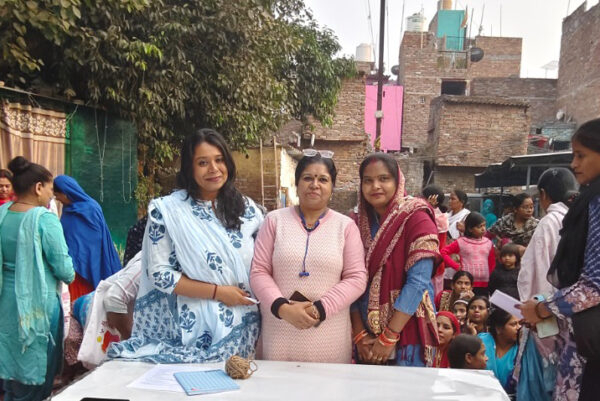
Communities and civil society are recognized in the Abuja Compact draft. Turning this recognition into practice means giving them a defined and adequately resourced role in shaping, implementing and monitoring for accountability, rather than merely a consultative status. This is consistent with what we heard directly through the From People to Leaders Community Priorities Survey earlier this year. The survey gathered input from 33 countries and called for communities to move toward the center of AMR action and decision making.
Equity needs structural treatment
Equity needs the same structural treatment. ReAct Africa’s submission to the consultation made an important complementary case that gender inequality, poverty and marginalization shape exposure to infection and access to treatment. These realities from the ground should be reflected explicitly in the Compact’s framing and commitments.
Disaggregate AMR surveillance data
ReAct’s comments also called for AMR surveillance data to be disaggregated by sex, age and geography where appropriate so that interventions can respond to real gaps. Financing and workforce commitments should also incorporate gender-responsive budgeting, fair compensation and adequate support for a health workforce that remains predominantly female and often underpaid.
4. Ground access and innovation in public health need

Prevention remains foundational, and the Compact’s ambition on infection prevention, water, sanitation and hygiene deserves concrete targets and implementation measures.
Access to antibiotics: Create regional opportunities
On access, the Compact has an opportunity to support regional manufacturing and technology transfer, preserve legal space for public-interest licensing tools, and encourage pooled procurement mechanisms. Research and development (R&D) needs to remain closely connected to public health priorities. We call for galvanized action by countries to advance public health driven Researhc & Development and access through an equity lens.
Looking ahead
Abuja sits midway between the 2024 UNGA political declaration and the next UN High Level Meeting on AMR in 2029. Much of what this moment needs has already been agreed. The task now is to carry those commitments fully into a Compact specific enough for countries, funders and civil society to implement and follow through on.
Broader effort for AMR governance
This task goes beyond the text of the Abuja Compact itself. The outcome of the forthcoming Abuja Ministerial Meeting and the evolution of the ministerial conference platform should be considered as part of a broader effort to strengthen the global AMR governance system. ReAct will continue to follow this process closely, through Abuja and beyond.
More Abuja articles by ReAct
Abuja meeting postponed: a moment to close the gaps before ministers reconvene.
Survey results and webinar 1: From People to Leaders: Community voices shaping Abuja 2026.
More from "2026"
- From fighting bacteria to dancing with life
- New ReAct Strategic Plan 2027–2030: Addressing antibiotic resistance in an era of polycrisis
- Abuja Compact: 4 key areas to carry commitments forward
- Maarifa Kids Zambia: Children as key AMR stakeholders
- ReAct Europe at Ukraine ReHealth 2026: Building resilient healthcare in times of war
- From people to leaders: strengthening community voices in the AMR response
- A detective story: Who Killed the Rational Use of Medicine?
- From People to Leaders: Bridging community priorities and global action ahead of Abuja 2026
- Six key takeaways from ReAct Africa Annual AMR Conference 2026
- Beyond diplomatic aspirations: Bridging the implementation gap in Pandemic Preparedness and AMR
- Connecting environment, AMR and youth action: meet Sarah Rauzana
- ReAct Asia Pacific Regional AMR Conference 2026 in November!
- Ukrainian Chief Nurse Alla Kuzhel: “Antibiotic resistance is not a problem of the future”
- Launch of book on “Reimagining Resistance: A Journey in Creative Disruption”
- Closing the gap: Highlights from the ReAct side event at the 79th WHA on AMR governance and financing
- New IPC and antibiotic resistance course for 50 nurses from Ukraine!
- “Every life is an inspiration”: Community-led antibiotic resistance awareness in Delhi’s slums
- From People to Leaders: Why communities must shape the future of AMR governance
- Abuja meeting postponed: a moment to close the gaps before ministers reconvene
- From rivers to resistance: Dr Diego Quijano on the environmental dimension of AMR
- International gathering on educational gardens, microbiome and AMR
- Bridging the AMR divide: Reflections from the WHA79 side event on equity, access, and community-led solutions
- ReAct’s 2025 Impact Report: From grassroots action to global policy
- Art and bio-solidarity in response to AMR
- Dr. Sharot leads the first antibiotic-smart primary health care center in Sweden
- Addressing AMR through art, childhoods and One Health
- Over 70 antibiotic-smart facilities in two years!
- Webinar and survey: From People to Leaders: Community voices shaping Abuja 2026
- From dialogue to progress: Strengthening global AMR governance
- Why the IPEA matters now: A Policy Brief for Member States
- Extension diploma in Educational Knapsack for Planetary Health
- From the World Health Assembly to the communities: Why youth must show up for the next Global Action Plan on AMR
- Ndahafa Imene: Turning curiosity into action on AMR
- Uniting Voices for Action: Inside the WHO Civil Society Task Force on AMR
- The Abuja High-Level Ministerial meeting: a chance to renew ambition and improve accountability to make the global response to antibiotic resistance more effective
- ReAct Europe at the 2026 Nobel Prize Teacher Summit: Global health in focus
- Securing the future of health: ReAct Latin America and Idec propose a new regional strategy for the Americas
- World Health Day: Reflecting on the penicillin revolution
- Reimagining AMR action through community voices: Lessons from Jahangirpuri, New Delhi, India
- Share your perspective: Community priorities survey for the Abuja 2026 AMR Ministerial Meeting
- Belén Juca: When the garden becomes a classroom for AMR
- ReAct at first Regional Meeting on AMR in Brasilia
- Faith Based Organizations: Critical allies for stronger action on AMR
- From Declaration to Action: Insights from the ReAct Asia Pacific 2025 Conference Report
- Antibiotic resistance and aquaculture: Why It matters for One Health
- Revised Global Action Plan on AMR delayed over technology transfer language
- Reflections from the EU JAMRAI2 Annual Meeting
- ReAct Latin America at global AMR Summit in Costa Rica
- A regional anthology: 20 years of action on antibiotic resistance
- Mobilizing faith-based organizations to address antibiotic resistance in Africa
- India’s AMR Response: High-level leadership and Implementation challenges
- Protecting cancer care in the age of antibiotic resistance
- BRIDGE-ABR: A ReAct-led collaboration on goal conflicts, antibiotic resistance and sustainability