
2026-09-24
ReAct Latin America brings a complex public health challenge to life through theatre, puppets and the adventures of two unconventional detectives.
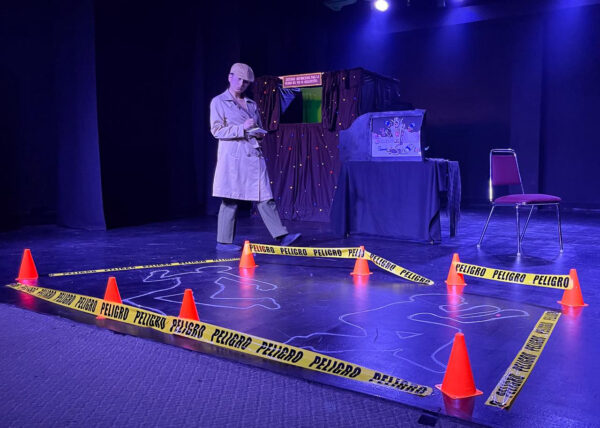
“Who killed the rational use of medicine? ” Was it doctors, pharmaceutical companies, governments, pharmacists, patients – or a whole system in which different interests and circumstances combine to encourage the inappropriate use of medicines?
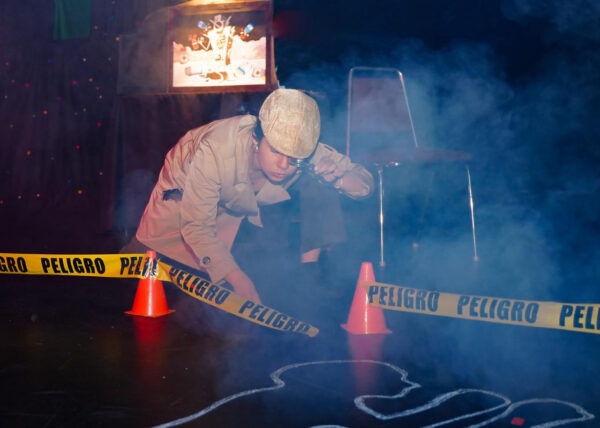
This is the mystery at the heart of “Who Killed the Rational Use of Medicine?”, a publication by ReAct Latin America that is now being adapted into a theatrical performance using actors and puppets. The production offers an imaginative way to explore why medicines, intended to protect health, can sometimes cause harm when used unnecessarily or incorrectly.
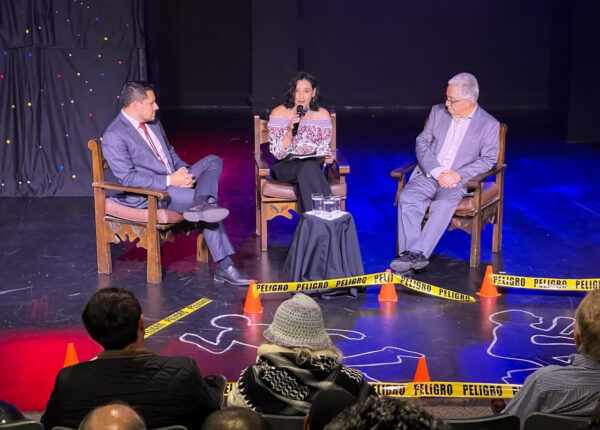
The play was performed on 2nd September 2026 at the Sala Alfonso Carrasco in Cuenca, Ecuador. It is part of ReAct Latin America’s ongoing campaign to promote rational medicine use and prevent the misuse and overuse of antibiotics in particular. The production is also intended to travel to different parts of Latin America, including Bolivia, during World AMR Awareness Week in November.
Bringing the mystery to life
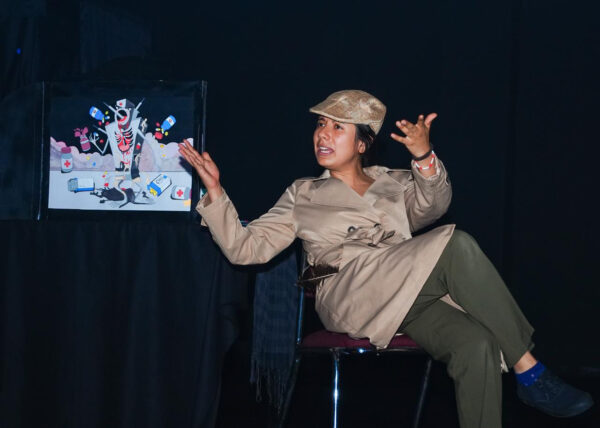
Through actors and puppets, the play brings together the multiple forces shaping how medicines are prescribed, sold and consumed. Rather than blaming a single group, it invites audiences to examine the relationships between healthcare practices, commercial interests, public policies, media influence, patients’ expectations and unequal access to healthcare.
The theatrical format makes these complex relationships accessible, encouraging audiences to question assumptions about medicines and the decisions surrounding their use.
From a technical conference to a detective novel
The original book emerged from the first international conference of the International Society to Improve the Use of Medicines (ISIUM), held in Bangkok in January 2020. Titled “People Improving the Use of Medicines: What We Know and Don’t Know”, the meeting brought together 175 participants from 34 countries.
The organisers decided to produce two reports: a conventional technical report for professionals, researchers and policymakers, and a second publication for a wider, non-technical audience.
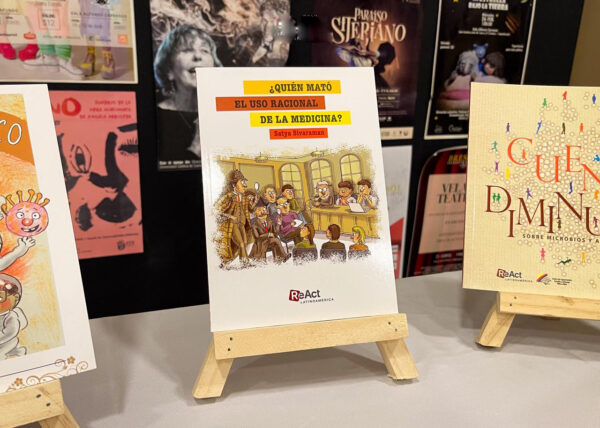
The result was “Who Killed Rational Use of Medicines?”, which was published through a collaboration between ISIUM and ReAct Latin America.
Instead of presenting conference proceedings in a conventional report, the book is in the form of a detective novel featuring two detectives, Herlock Sholmes and Dr Whatsup. The duo attend conference sessions, workshops and discussions, gathering clues and interrogating assumptions as they investigate the mysterious death of rational medicine use. Although fictional in form, the narrative draws on the actual presentations, debates and discussions at the conference. Humour, dialogue and illustrations make technical material accessible while retaining its scientific and social substance.
Uncovering the multiple causes
The book’s central message is that irrational medicine use cannot be explained simply by individual behaviour. Inappropriate prescribing, self-medication, commercial incentives, inadequate regulation, misinformation and unequal access to healthcare can reinforce one another.
Antibiotics provide a particularly important example: unnecessary or inappropriate use contributes to antimicrobial resistance, making infections increasingly difficult to treat.The book therefore calls for more than advice to patients. It highlights the need for changes in healthcare practices, policies and commercial influences, alongside greater public participation in decisions about health and medicines.
Its broader questions are fundamental: What is health? What do medicines mean to different people? And who gets to decide how they should be used?
Experts welcome an engaging approach
The book has received encouraging responses from public health experts in Latin America.
Susana Ramírez Hita, a Peruvian member of MARC, UCSNAL and the Plataforma Perú País Libre de Transgénicos, said, “The book is original and educational; it presents the content of the conference through a story.
Nila Heredia Miranda, physician, activist and former Bolivian Minister of Health, welcomed the book’s entertaining presentation of medicines, policies, public perceptions and the influence of pharmaceutical companies and commercial actors.
According to her,
“I cannot imagine a more educational and entertaining way of presenting and explaining the different aspects related to medicines: their use, policies, public perceptions, and their discretionary management by doctors, pharmaceutical companies and medicine distributors.”
From classrooms to communities
The publication is currently being used in several medical colleges to teach students about the complexity of rational medicine use. Its storytelling approach encourages future health professionals to look beyond pharmacology and consider the social, economic, cultural and institutional influences on prescribing and medicine consumption.
The theatrical adaptation extends this approach to wider audiences. By combining performance, puppetry and storytelling, it creates opportunities for communities to engage with issues often confined to technical discussions.
More from "2026"
- Maarifa Kids Zambia: Children as key AMR stakeholders
- ReAct Europe at Ukraine ReHealth 2026: Building resilient healthcare in times of war
- From people to leaders: strengthening community voices in the AMR response
- A detective story: Who Killed the Rational Use of Medicine?
- From People to Leaders: Bridging community priorities and global action ahead of Abuja 2026
- Six key takeaways from ReAct Africa Annual AMR Conference 2026
- Beyond diplomatic aspirations: Bridging the implementation gap in Pandemic Preparedness and AMR
- ReAct Asia Pacific Regional AMR Conference 2026 in November!
- Ukrainian Chief Nurse Alla Kuzhel: “Antibiotic resistance is not a problem of the future”
- Launch of book on “Reimagining Resistance: A Journey in Creative Disruption”
- Closing the gap: Highlights from the ReAct side event at the 79th WHA on AMR governance and financing
- New IPC and antibiotic resistance course for 50 nurses from Ukraine!
- “Every life is an inspiration”: Community-led antibiotic resistance awareness in Delhi’s slums
- From People to Leaders: Why communities must shape the future of AMR governance
- Abuja meeting postponed: a moment to close the gaps before ministers reconvene
- From rivers to resistance: Dr Diego Quijano on the environmental dimension of AMR
- International gathering on educational gardens, microbiome and AMR
- Bridging the AMR divide: Reflections from the WHA79 side event on equity, access, and community-led solutions
- ReAct’s 2025 Impact Report: From grassroots action to global policy
- Art and bio-solidarity in response to AMR
- Dr. Sharot leads the first antibiotic-smart primary health care center in Sweden
- Addressing AMR through art, childhoods and One Health
- Over 70 antibiotic-smart facilities in two years!
- Webinar: From People to Leaders: Community voices shaping Abuja 2026
- From dialogue to progress: Strengthening global AMR governance
- Why the IPEA matters now: A Policy Brief for Member States
- Extension diploma in Educational Knapsack for Planetary Health
- From the World Health Assembly to the communities: Why youth must show up for the next Global Action Plan on AMR
- Ndahafa Imene: Turning curiosity into action on AMR
- Uniting Voices for Action: Inside the WHO Civil Society Task Force on AMR
- The Abuja High-Level Ministerial meeting: a chance to renew ambition and improve accountability to make the global response to antibiotic resistance more effective
- ReAct Europe at the 2026 Nobel Prize Teacher Summit: Global health in focus
- Securing the future of health: ReAct Latin America and Idec propose a new regional strategy for the Americas
- World Health Day: Reflecting on the penicillin revolution
- Reimagining AMR action through community voices: Lessons from Jahangirpuri, New Delhi, India
- Share your perspective: Community priorities survey for the Abuja 2026 AMR Ministerial Meeting
- Belén Juca: When the garden becomes a classroom for AMR
- ReAct at first Regional Meeting on AMR in Brasilia
- Faith Based Organizations: Critical allies for stronger action on AMR
- From Declaration to Action: Insights from the ReAct Asia Pacific 2025 Conference Report
- Antibiotic resistance and aquaculture: Why It matters for One Health
- Revised Global Action Plan on AMR delayed over technology transfer language
- Reflections from the EU JAMRAI2 Annual Meeting
- ReAct Latin America at global AMR Summit in Costa Rica
- A regional anthology: 20 years of action on antibiotic resistance
- Mobilizing faith-based organizations to address antibiotic resistance in Africa
- India’s AMR Response: High-level leadership and Implementation challenges
- Protecting cancer care in the age of antibiotic resistance
- BRIDGE-ABR: A ReAct-led collaboration on goal conflicts, antibiotic resistance and sustainability