
2026-08-26
Alla Kuzhel is Chief Nurse at the Municipal Non-Profit Enterprise “Children’s City Polyclinic No. 6” of the Odesa City Council. She is also a facilitator of peer support groups and curator of the project On the Waves of Nursing. Alla participated in ReAct’s online training on infection prevention and control in late 2025, and ReAct is looking forward to ways to collaborate.. In this interview, she shares her insights on addressing antibiotic resistance in Ukraine, a country currently facing the challenges of ongoing conflict.
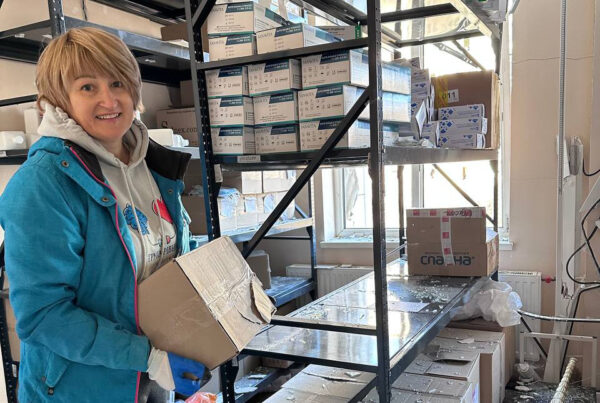
Why did you become a nurse?
– I have always been attracted to a profession in which one can not just do a job, but truly help people. A nurse is beside the patient in the most vulnerable moments — when the patient is in pain, afraid, or does not know what to expect. It is precisely then that not only professional skills are important, but also calmness, support, and humanity.
– Over the years, I have become convinced that I made the right choice. Nursing is a profession with enormous responsibility and, at the same time, great potential for influence. We can change the patient’s experience, the work of the team, and the quality of care overall. Nurses can do everything – this is my motto, which was formed from experience.
How long have you been working as a nurse?

– I have been working as a nurse since 2001 — for 25 years now. I began my professional path in the burn unit of Chernihiv Regional Hospital. It was a very difficult, but extremely important school of professionalism, endurance, and responsibility.
– Today I work as the chief nurse of the Municipal Non-Profit Enterprise “Children’s City Polyclinic No. 6” of the Odesa City Council. In addition to management work, I take part in training nurses, am the curator of the project “On the Waves of Nursing”, and a facilitator of peer groups. It is important for me not only to work myself, but also to create an environment in which nurses can develop, learn, and feel the value of their profession.
In your opinion, what is most needed to curb antibiotic resistance in Ukraine?
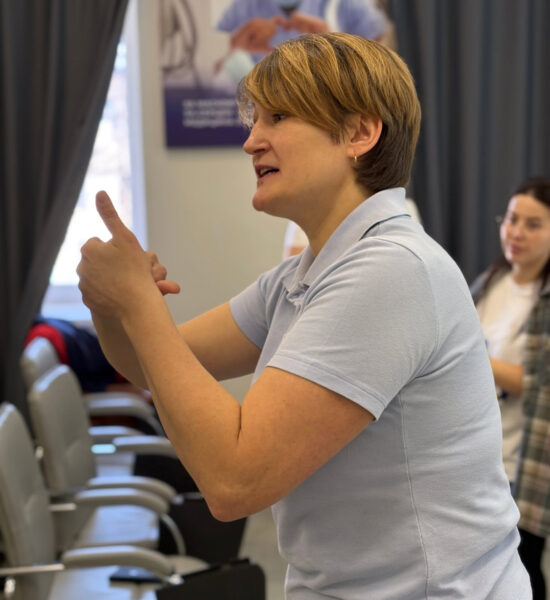
– First and foremost, we need a systemic approach. Not separate campaigns or formal compliance with requirements, but a daily culture of safe medical care.
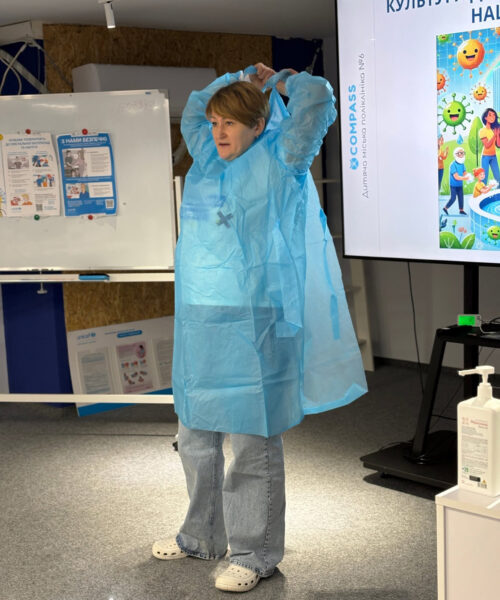
– This means the justified prescribing of antibiotics, laboratory diagnostics, epidemiological surveillance, compliance with hand hygiene rules, correct use of personal protective equipment, proper cleaning and disinfection, as well as continuous training of healthcare workers.
– It is also important to work with the population. People must understand that antibiotics do not treat viral infections, that they must not be taken “just in case”, that one must not independently change the dose or stop treatment after the first signs of improvement. Antibiotic resistance is not a problem of the future. It already affects whether we will be able to treat infections effectively today.
Why are antibiotic resistance and infection prevention and control priority areas in Ukraine right now?
– Because of the war, Ukraine’s healthcare system is operating under extremely difficult conditions. We have a large number of injured patients, repeat hospitalizations, complex surgical interventions, overloaded facilities, displacement of people, and disruption of the usual care pathways. All this increases the risk of the emergence and spread of infections, including those caused by antibiotic-resistant microorganisms.
– Therefore, infection control today is not simply a set of sanitary rules. It is a matter of the safety of patients, healthcare workers, and the resilience of the entire healthcare system. Every infection we have prevented is a patient who will not need additional antibiotic treatment. Prevention itself is one of the most effective ways to curb antibiotic resistance.
What role can nurses play in strengthening infection control practices in hospitals and clinics in Ukraine?
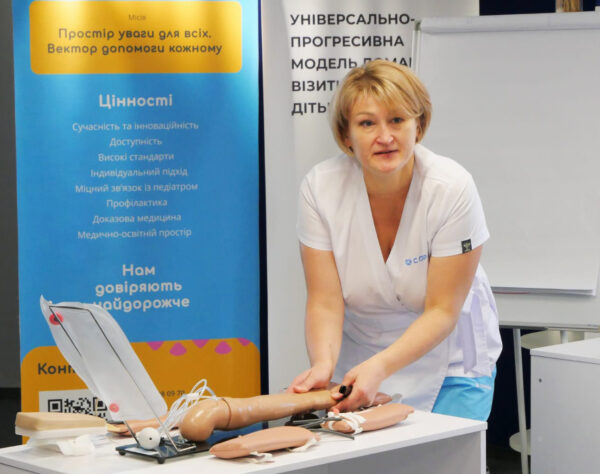
– Nurses play a key role because it is they who implement most infection control practices directly beside the patient every day.
These are hand hygiene, aseptic techniques, the use of personal protective equipment, the safe administration of injections, catheter care, proper handling of medical waste, cleaning of equipment, and monitoring compliance with procedures.
– But our role is much broader. A nurse can notice risks, report problems, conduct training, take part in audits, analyze mistakes, and propose changes. Within the control of antibiotic use, the nurse monitors the timelines of administration of medications, the correctness of dosage, the patient’s response, the collection of material for testing, and communication within the team. A nurse is not a passive executor of instructions. She is an active participant in the patient safety system.
What do you value most in your profession?
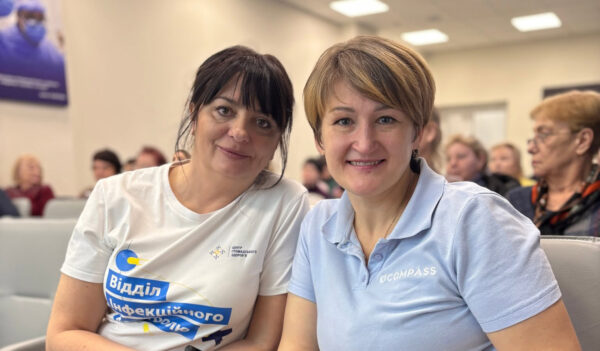
– Above all, I value trust. The trust of the patient, the child, the parents, and colleagues. A nurse is often the first person who meets the patient, explains, supports, and helps the patient go through the entire treatment pathway.
– I also greatly value the opportunity to develop constantly. A nurse is an independent, professional, and very important component of medical care. A nurse has their own competencies, sees many processes from the inside, and can be a real driving force for change in the institution.
– For example, an internship in Norway once again showed me how important clear roles, trust in the specialist, and properly organized processes are. I saw a system that is sustained not by the daily heroism and exhaustion of employees, but by clear rules, distribution of responsibility, and respect for every member of the team. It is precisely this principle that I would like to adapt as much as possible to Ukrainian realities.
ReAct’s collaboration and projects in Ukraine
Since 2025, ReAct has been supporting Ukraine’s National Action Plan on Antimicrobial Resistance (AMR) in collaboration with Swedish and Ukrainian partners.
The initiative focuses on:
- strengthening infection prevention and control
- raising awareness of AMR
- and building healthcare capacity through training, education, research, and scientific exchange.
The overarching aim is to support a sustainable, locally led response to antibiotic resistance in a healthcare system challenged by ongoing war.
Read more:
ReAct Project: Building resilience against AMR amid conflict in Ukraine.
New IPC and antibiotic resistance course for 50 nurses from Ukraine!
ReAct Impact Report 2025 (p 14) – seminar for 2000 health care professionals from Ukraine
More from "2026"
- From People to Leaders: Bridging community priorities and global action ahead of Abuja 2026
- Six key takeaways from ReAct Africa Annual AMR Conference 2026
- Beyond diplomatic aspirations: Bridging the implementation gap in Pandemic Preparedness and AMR
- ReAct Asia Pacific Regional AMR Conference 2026 in November!
- Ukrainian Chief Nurse Alla Kuzhel: “Antibiotic resistance is not a problem of the future”
- Launch of book on “Reimagining Resistance: A Journey in Creative Disruption”
- Closing the gap: Highlights from the ReAct side event at the 79th WHA on AMR governance and financing
- New IPC and antibiotic resistance course for 50 nurses from Ukraine!
- “Every life is an inspiration”: Community-led antibiotic resistance awareness in Delhi’s slums
- From People to Leaders: Why communities must shape the future of AMR governance
- Abuja meeting postponed: a moment to close the gaps before ministers reconvene
- From rivers to resistance: Dr Diego Quijano on the environmental dimension of AMR
- International gathering on educational gardens, microbiome and AMR
- Bridging the AMR divide: Reflections from the WHA79 side event on equity, access, and community-led solutions
- ReAct’s 2025 Impact Report: From grassroots action to global policy
- Art and bio-solidarity in response to AMR
- Dr. Sharot leads the first antibiotic-smart primary health care center in Sweden
- Addressing AMR through art, childhoods and One Health
- Over 70 antibiotic-smart facilities in two years!
- Webinar: From People to Leaders: Community voices shaping Abuja 2026
- From dialogue to progress: Strengthening global AMR governance
- Why the IPEA matters now: A Policy Brief for Member States
- Extension diploma in Educational Knapsack for Planetary Health
- From the World Health Assembly to the communities: Why youth must show up for the next Global Action Plan on AMR
- Ndahafa Imene: Turning curiosity into action on AMR
- Uniting Voices for Action: Inside the WHO Civil Society Task Force on AMR
- The Abuja High-Level Ministerial meeting: a chance to renew ambition and improve accountability to make the global response to antibiotic resistance more effective
- ReAct Europe at the 2026 Nobel Prize Teacher Summit: Global health in focus
- Securing the future of health: ReAct Latin America and Idec propose a new regional strategy for the Americas
- World Health Day: Reflecting on the penicillin revolution
- Reimagining AMR action through community voices: Lessons from Jahangirpuri, New Delhi, India
- Share your perspective: Community priorities survey for the Abuja 2026 AMR Ministerial Meeting
- Belén Juca: When the garden becomes a classroom for AMR
- ReAct at first Regional Meeting on AMR in Brasilia
- Faith Based Organizations: Critical allies for stronger action on AMR
- From Declaration to Action: Insights from the ReAct Asia Pacific 2025 Conference Report
- Antibiotic resistance and aquaculture: Why It matters for One Health
- Revised Global Action Plan on AMR delayed over technology transfer language
- Reflections from the EU JAMRAI2 Annual Meeting
- ReAct Latin America at global AMR Summit in Costa Rica
- A regional anthology: 20 years of action on antibiotic resistance
- Mobilizing faith-based organizations to address antibiotic resistance in Africa
- India’s AMR Response: High-level leadership and Implementation challenges
- Protecting cancer care in the age of antibiotic resistance
- BRIDGE-ABR: A ReAct-led collaboration on goal conflicts, antibiotic resistance and sustainability