
2026-08-27
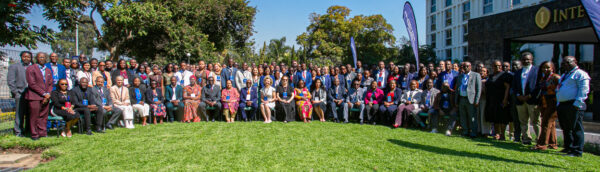
The ReAct Africa Annual AMR Conference 2026, held on 21–22 July in Lusaka, Zambia, brought together nearly 200 participants from 35 countries to advance practical, people-centred solutions to antimicrobial resistance (AMR). Participants represented governments, academia, health professionals, civil society, communities, youth and faith actors, development partners, and stakeholders from animal health, agriculture and the environment.

Held under the theme “Africa Leading the Way to Institutionalising Pragmatic People-Centred AMR Solutions from Grassroots to Regional Level,” the conference sought to move the AMR conversation beyond identifying challenges towards demonstrating what works, what can be adapted and scaled, and how successful approaches can become embedded within routine systems and institutions.
Connecting policy to practice: Core discussion themes
Across two days, discussions connected high-level political commitments with practical country and community experiences. Sessions explored governance and accountability, sustainable financing, surveillance, stewardship, diagnostics, primary healthcare, infection prevention and control, WASH, digital innovation, research and development, and the role of communities and frontline actors in shaping effective AMR responses.
Six priorities for moving AMR action forward across Africa
A central outcome of the conference was the identification of six priorities for strengthening implementation across Africa:
1. Prioritise a realistic set of high-impact interventions within National Action Plans on AMR, focusing resources and attention on actions that can deliver meaningful results.
2. Institutionalize responsibilities within routine systems and formal mandates, ensuring that AMR action is not dependent on short-term projects or individual initiatives.
3. Finance implementation through domestic budgets, investment cases and existing financing mechanisms to support more sustainable national responses.
4. Implement integrated interventions across prevention, diagnostics, surveillance, stewardship and access, reflecting the interconnected nature of the AMR challenge.
5. Include communities, frontline workers and vulnerable groups in decision-making and implementation, ensuring that AMR responses reflect lived realities and local needs.
6. Measure and scale proven approaches using evidence, accountability mechanisms and regional peer learning, allowing successful interventions to inform broader implementation across countries.
From dialogue to delivery: Institutionalising and scaling what works
The conference reinforced a clear message:
Africa has practical experience, locally led innovations and solutions that can strengthen the AMR response. The next step is to institutionalise, finance and scale them.
Moving from dialogue to delivery will require sustained political commitment, stronger One Health collaboration, meaningful participation of communities and frontline actors, and greater investment in interventions that have demonstrated their value.
The ReAct Africa Annual AMR Conference 2026 Summary Report shares the major discussions, priorities and direction emerging from the conference as stakeholders work towards a more sustainable, equitable and people-centred AMR response across the continent.
More from "2026"
- From People to Leaders: Bridging community priorities and global action ahead of Abuja 2026
- Six key takeaways from ReAct Africa Annual AMR Conference 2026
- Beyond diplomatic aspirations: Bridging the implementation gap in Pandemic Preparedness and AMR
- ReAct Asia Pacific Regional AMR Conference 2026 in November!
- Ukrainian Chief Nurse Alla Kuzhel: “Antibiotic resistance is not a problem of the future”
- Launch of book on “Reimagining Resistance: A Journey in Creative Disruption”
- Closing the gap: Highlights from the ReAct side event at the 79th WHA on AMR governance and financing
- New IPC and antibiotic resistance course for 50 nurses from Ukraine!
- “Every life is an inspiration”: Community-led antibiotic resistance awareness in Delhi’s slums
- From People to Leaders: Why communities must shape the future of AMR governance
- Abuja meeting postponed: a moment to close the gaps before ministers reconvene
- From rivers to resistance: Dr Diego Quijano on the environmental dimension of AMR
- International gathering on educational gardens, microbiome and AMR
- Bridging the AMR divide: Reflections from the WHA79 side event on equity, access, and community-led solutions
- ReAct’s 2025 Impact Report: From grassroots action to global policy
- Art and bio-solidarity in response to AMR
- Dr. Sharot leads the first antibiotic-smart primary health care center in Sweden
- Addressing AMR through art, childhoods and One Health
- Over 70 antibiotic-smart facilities in two years!
- Webinar: From People to Leaders: Community voices shaping Abuja 2026
- From dialogue to progress: Strengthening global AMR governance
- Why the IPEA matters now: A Policy Brief for Member States
- Extension diploma in Educational Knapsack for Planetary Health
- From the World Health Assembly to the communities: Why youth must show up for the next Global Action Plan on AMR
- Ndahafa Imene: Turning curiosity into action on AMR
- Uniting Voices for Action: Inside the WHO Civil Society Task Force on AMR
- The Abuja High-Level Ministerial meeting: a chance to renew ambition and improve accountability to make the global response to antibiotic resistance more effective
- ReAct Europe at the 2026 Nobel Prize Teacher Summit: Global health in focus
- Securing the future of health: ReAct Latin America and Idec propose a new regional strategy for the Americas
- World Health Day: Reflecting on the penicillin revolution
- Reimagining AMR action through community voices: Lessons from Jahangirpuri, New Delhi, India
- Share your perspective: Community priorities survey for the Abuja 2026 AMR Ministerial Meeting
- Belén Juca: When the garden becomes a classroom for AMR
- ReAct at first Regional Meeting on AMR in Brasilia
- Faith Based Organizations: Critical allies for stronger action on AMR
- From Declaration to Action: Insights from the ReAct Asia Pacific 2025 Conference Report
- Antibiotic resistance and aquaculture: Why It matters for One Health
- Revised Global Action Plan on AMR delayed over technology transfer language
- Reflections from the EU JAMRAI2 Annual Meeting
- ReAct Latin America at global AMR Summit in Costa Rica
- A regional anthology: 20 years of action on antibiotic resistance
- Mobilizing faith-based organizations to address antibiotic resistance in Africa
- India’s AMR Response: High-level leadership and Implementation challenges
- Protecting cancer care in the age of antibiotic resistance
- BRIDGE-ABR: A ReAct-led collaboration on goal conflicts, antibiotic resistance and sustainability