
2026-10-21
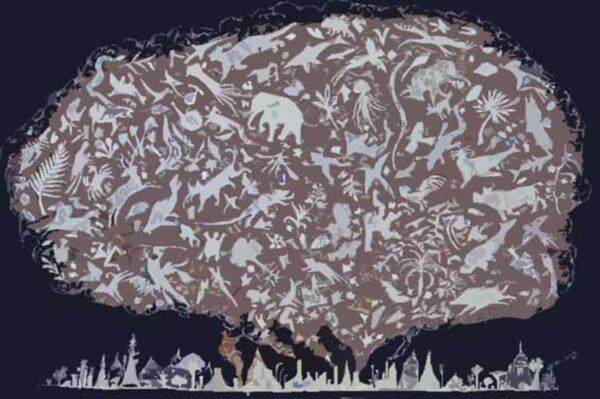
For two decades, Reimagining Resistance has explored and challenged the widespread metaphor of "waging war against bacteria" as a way of understanding and responding to antimicrobial resistance (AMR). The publication *Reimagining Resistance: A Journey in Creative Disruption* documents an intellectual and practical journey that began by questioning the language of AMR and evolved into a wider exploration of the relationships between humans, microorganisms and the living world. Bringing together science, art, ecology, Indigenous knowledge, philosophy and community action, it invites us to rethink not only AMR but also the foundations of public health.
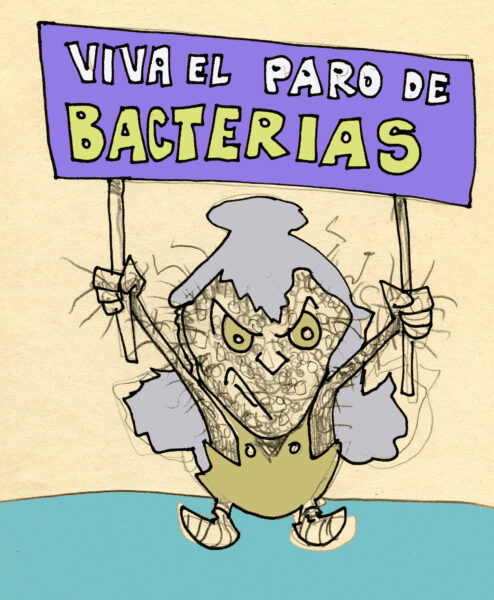
The initiative emerged from a recognition that metaphors shape responses. When bacteria are portrayed as enemies and antibiotics as weapons, the logical response appears to be their elimination. Yet bacteria are ancient, diverse and indispensable participants in the ecosystems that sustain life. Many perform essential functions within our bodies and the wider environment. The question was never whether antibiotics were necessary: they remain indispensable, and equitable access to them is essential. Rather, could a model centred on combat and eradication adequately address the complex relationships through which health and disease emerge?
From war to dance: putting a new idea into practice
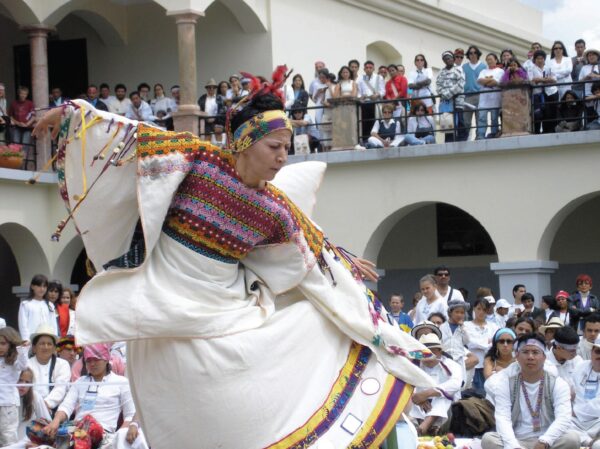
Beginning with the ‘Microbes and Metaphors‘ report in 2008, the initiative developed its defining alternative: “Dancing with Bacteria”. Dance evokes interaction, adaptation, rhythm, balance and mutual responsiveness. Instead of imagining a one-sided battle, it encourages us to consider how humans and microorganisms continually influence one another within changing biological and environmental conditions.
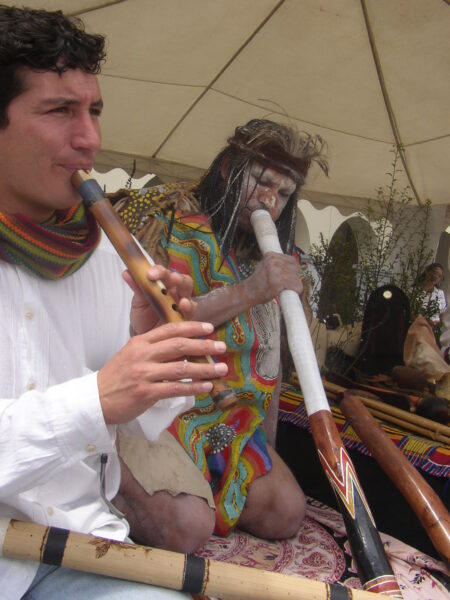
Crucially, this was not simply a change in vocabulary. The process explored ways of making the invisible microbial
world accessible through **gardening, visual art, photography, music, dance and educational activities**. These approaches offered opportunities for people to encounter microbial life through observation, creative expression and shared experience, rather than learning about it exclusively through scientific explanations or warnings about infection. Artists and musicians helped translate complex ideas into experiences that people could see, hear, feel and discuss.
The practical significance is considerable. Preventing infections, strengthening immunity, maintaining healthy environments and using antibiotics responsibly become complementary activities in sustaining life. The metaphor does not romanticise microorganisms or suggest that dangerous infections should go untreated. It challenges the assumption that killing microbes is the only meaningful response.
Learning across disciplines and cultures
Another concrete achievement has been the creation of a collaborative process that brings together people who rarely share the same platforms. Microbiologists, clinicians, public health practitioners, artists, musicians, educators, activists and Indigenous communities have contributed different forms of knowledge and experience. Mary Murray, Arturo Quizhpe, Satya Sivaraman and Kléver Calle are among those who helped shape this journey, alongside a wider network of collaborators across Latin America and beyond.
The incorporation of ‘Sumak Kawsay’, often translated as Good Living, illustrates how this exchange widened the project’s perspective. Rooted in Indigenous thought, the concept connects wellbeing with the health of Mother Earth and all living beings, visible and invisible. It offers a different starting point from approaches that treat human health as separate from ecological wellbeing.
Community participation has reinforced another important principle: learning with people is different from merely delivering information to them. Gardening and other educational activities, for example, can provide shared spaces in which communities explore their relationship with the living world. Art becomes a method of inquiry, not decorative packaging for scientific messages. It can provoke questions, communicate uncertainty and engage emotions in ways that conventional health communication may not achieve.
Rethinking public health and the polycrisis
The publication draws out practical implications for AMR policy. Antibiotic stewardship must be balanced with equitable access: inappropriate use accelerates resistance, but denying effective treatment to people who need it also causes avoidable suffering and death. Hospitals, farms, food systems, waterways and urban environments must be understood as interconnected ecological settings. Infection prevention therefore requires not only medicines but also hygiene, sanitation, infrastructure and environmental protection.
Equally important is attention to the social conditions that shape infection and treatment. Clean water, adequate nutrition, safe living conditions and timely healthcare can reduce infections and the need for antibiotics. AMR action must consequently connect with efforts to strengthen health systems, protect ecosystems and reduce inequality.
Perhaps the initiative’s most far-reaching contribution is its anticipation of today’s concept of the ‘polycrisis’: the interaction of multiple crises whose combined consequences exceed those of their individual components. Long before the term became prominent in policy discussions, Reimagining Resistance was bringing AMR into conversation with ecology, economics, social justice, food systems and Indigenous knowledge.
Climate change, pollution, industrial food production, poverty and fragile health systems interact to shape microbial life and human vulnerability. Treating resistance as an isolated technical problem obscures these connections. The same reductionist thinking that seeks a single enemy and a simple solution also limits our ability to respond to interconnected threats to human and planetary health.
From creative disruption to collective action
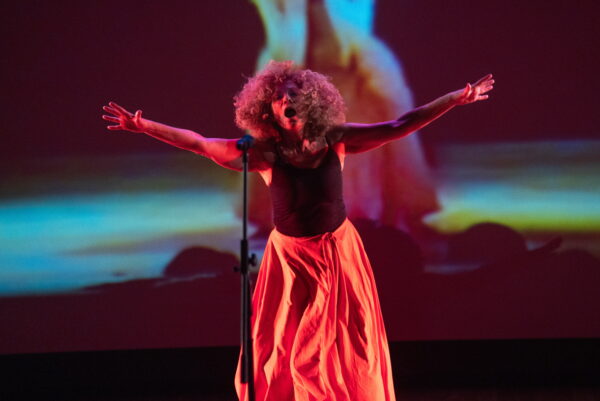
Reimagining Resistance demonstrates the value of combining scientific understanding with artistic imagination, community experience and ecological thinking. Its concrete experiments in gardening, photography, music, dance and education show how a different conceptual framework can open new possibilities for public engagement, while its interdisciplinary foundations challenge public health to look beyond conventional professional boundaries.
The task now is to translate these insights into sustained collective practice. Safeguarding antibiotics requires more than changing prescribing behaviour; it also means reconsidering how societies organise healthcare, produce food, manage environments and understand their relationship with microbial life. After twenty years of dialogue and experimentation, the initiative offers a compelling challenge: rather than attempting to control life through an endless war against its complexity, we must learn to understand its relationships and “dance with it”.
More from "2026"
- From fighting bacteria to dancing with life
- New ReAct Strategic Plan 2027–2030: Addressing antibiotic resistance in an era of polycrisis
- Abuja Compact: 4 key areas to carry commitments forward
- Maarifa Kids Zambia: Children as key AMR stakeholders
- ReAct Europe at Ukraine ReHealth 2026: Building resilient healthcare in times of war
- From people to leaders: strengthening community voices in the AMR response
- A detective story: Who Killed the Rational Use of Medicine?
- From People to Leaders: Bridging community priorities and global action ahead of Abuja 2026
- Six key takeaways from ReAct Africa Annual AMR Conference 2026
- Beyond diplomatic aspirations: Bridging the implementation gap in Pandemic Preparedness and AMR
- Connecting environment, AMR and youth action: meet Sarah Rauzana
- ReAct Asia Pacific Regional AMR Conference 2026 in November!
- Ukrainian Chief Nurse Alla Kuzhel: “Antibiotic resistance is not a problem of the future”
- Launch of book on “Reimagining Resistance: A Journey in Creative Disruption”
- Closing the gap: Highlights from the ReAct side event at the 79th WHA on AMR governance and financing
- New IPC and antibiotic resistance course for 50 nurses from Ukraine!
- “Every life is an inspiration”: Community-led antibiotic resistance awareness in Delhi’s slums
- From People to Leaders: Why communities must shape the future of AMR governance
- Abuja meeting postponed: a moment to close the gaps before ministers reconvene
- From rivers to resistance: Dr Diego Quijano on the environmental dimension of AMR
- International gathering on educational gardens, microbiome and AMR
- Bridging the AMR divide: Reflections from the WHA79 side event on equity, access, and community-led solutions
- ReAct’s 2025 Impact Report: From grassroots action to global policy
- Art and bio-solidarity in response to AMR
- Dr. Sharot leads the first antibiotic-smart primary health care center in Sweden
- Addressing AMR through art, childhoods and One Health
- Over 70 antibiotic-smart facilities in two years!
- Webinar and survey: From People to Leaders: Community voices shaping Abuja 2026
- From dialogue to progress: Strengthening global AMR governance
- Why the IPEA matters now: A Policy Brief for Member States
- Extension diploma in Educational Knapsack for Planetary Health
- From the World Health Assembly to the communities: Why youth must show up for the next Global Action Plan on AMR
- Ndahafa Imene: Turning curiosity into action on AMR
- Uniting Voices for Action: Inside the WHO Civil Society Task Force on AMR
- The Abuja High-Level Ministerial meeting: a chance to renew ambition and improve accountability to make the global response to antibiotic resistance more effective
- ReAct Europe at the 2026 Nobel Prize Teacher Summit: Global health in focus
- Securing the future of health: ReAct Latin America and Idec propose a new regional strategy for the Americas
- World Health Day: Reflecting on the penicillin revolution
- Reimagining AMR action through community voices: Lessons from Jahangirpuri, New Delhi, India
- Share your perspective: Community priorities survey for the Abuja 2026 AMR Ministerial Meeting
- Belén Juca: When the garden becomes a classroom for AMR
- ReAct at first Regional Meeting on AMR in Brasilia
- Faith Based Organizations: Critical allies for stronger action on AMR
- From Declaration to Action: Insights from the ReAct Asia Pacific 2025 Conference Report
- Antibiotic resistance and aquaculture: Why It matters for One Health
- Revised Global Action Plan on AMR delayed over technology transfer language
- Reflections from the EU JAMRAI2 Annual Meeting
- ReAct Latin America at global AMR Summit in Costa Rica
- A regional anthology: 20 years of action on antibiotic resistance
- Mobilizing faith-based organizations to address antibiotic resistance in Africa
- India’s AMR Response: High-level leadership and Implementation challenges
- Protecting cancer care in the age of antibiotic resistance
- BRIDGE-ABR: A ReAct-led collaboration on goal conflicts, antibiotic resistance and sustainability